
*Brendan Bloom
I. Introduction
America’s political leadership is one of the oldest in its history,[1] and the signs are starting to show. In September, 96-year-old federal judge Pauline Newman of the U.S. Court of Appeals for the Federal Circuit was suspended from hearing cases after she refused to undergo an evaluation as part of an investigation concerning her mental fitness.[2] The Chief Judge of the Federal Circuit began the investigation into Newman in March after reports that Newman suffered a cardiac incident emerged.[3] Preliminary results from the investigation indicate that court staff witnessed Newman struggle with basic tasks and become hostile with court staff.[4] Similar incidents have occurred in the legislative branch. Senator Mitch McConnell, 81, appeared to freeze and lack capacity to speak in two separate press conferences over the summer.[5] In September, Senator Dianne Feinstein passed away while in office as the oldest sitting Senator at age 90. President Biden, who has announced his run for reelection, would be 82 by the time his second term begins. As our politicians continue to age, issues related to their health and competency will only continue to increase.[6] How should the electorate handle the increasing age and corresponding capacity of its leaders? Instituting age caps and regular cognitive assessments offer two possible ways to handle this growing issue.
II. Congressional Term Limits: A Pipe Dream? Or Legitimate Solution?
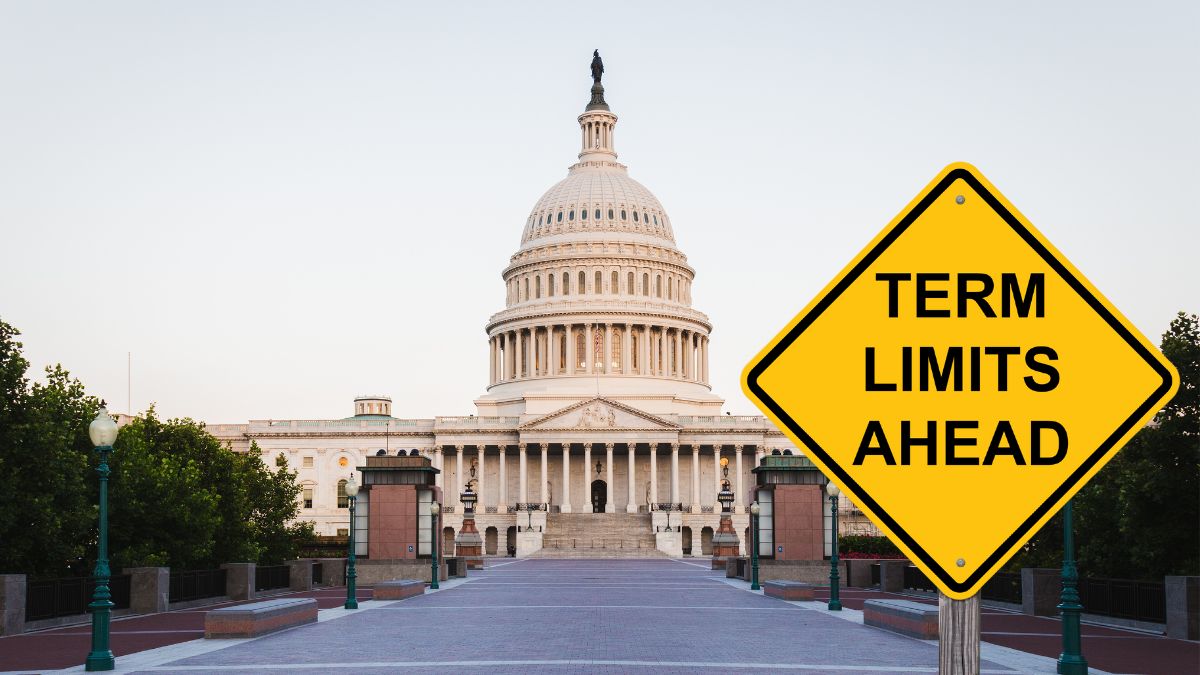
Some have suggested that an amendment to the Constitution establishing term limits for members of Congress would solve the issue of America’s aging politicians.[7] This is not a new suggestion. This issue was at the forefront in the 1995 landmark Supreme Court case, U.S. Term Limits, Inc. v. Thornton.[8] Prior to U.S. Term Limits, Arkansas passed an amendment to its state constitution that prohibited a person from serving more than three terms in the U.S. House of Representatives.[9] The Court held, however, that it was beyond a state’s power to impose stricter qualifications for prospective members of Congress than those created by the federal Constitution.[10] The decision had immediate and far-reaching effects, invalidating term limit legislation on the books in twenty-three states. The majority opined that a state’s ability to impose such a change to the Constitution could only come from a constitutional amendment.[11] A constitutional amendment to establish term limits for members of Congress is not out of the realm of possibility,[12] but there are no illusions about the uphill battle supporters of such an amendment would face. The Twenty-Seventh Amendment was the last to be ratified over thirty years ago, though it was actually proposed as part of the initial batch of amendments in 1789.[13]
III. Age Limits
The current argument for congressional term limits fails to adequately address the issue of aging political leadership because it does not account for the executive and judicial branches of our government. For example, as of 2020, the average age of federal judges was sixty-nine years old.[14] Because all federal judicial appointments are for life, some legal scholars are concerned that many of America’s federal judges will soon be at an age in which their cognitive abilities could be in question.[15] To be elected President, a person must only be a natural-born citizen and have attained the age of 35.[16] The two most recently-elected presidents were the second oldest and the oldest in U.S. history, at the ages of 70 and 77, respectively.[17]
As an alternative to term limits, the American people could impose caps on the age of the various political offices and federal judges like the limits imposed on other professions in America such as pilots, police officers, and even judges in some state courts. However, like term limits, this solution would still require a constitutional amendment since qualifications for federal office are expressly laid out in the Constitution. Though constitutional scholars have offered examples of what that amendment might look like,[18] this solution would likely be overbroad since “age is just a number.” Neuroscience holds that people and their brains age differently.[19] There is no automatic decline in cognitive capacity.[20] “The concern for aging in office is not age itself, but the cognitive decline often accompanying it. An Amendment prohibiting individuals from taking office based on age alone could fail this goal by prohibiting a competent and capable eighty-year-old from taking office while allowing a sixty-five-year-old with severe memory concerns to govern.”
IV. A Third Solution
Recently, some politicians have called for a different approach to the age and capacity issue: basic mental competency tests for politicians.[21] While these types of competency tests could theoretically apply to a politician or judge of any age, some scholars cite 75 as the best age.[22] As opposed to a cap, competency tests would not impose a mandatory retirement, but would instead require politicians to answer a variety of basic questions such as how many grandchildren they have or where they were born.[23] Such an assessment could be used to signal budding cognitive issues in political leaders of any age, but particularly those aging and more likely to become subject to cognitive failures.
For the aging judiciary, one scholar has suggested federal judges receive individual cognitive assessments, with the option to keep the results of the assessment private to maintain judicial independence from other branches of government.[24] This could be an effective tool for a situation like the one currently facing Judge Newman.[25] However, requiring a mental competency test as part of a targeted investigation, as in Judge Newman’s case, could feel hostile. A better solution would be to require mental competency tests as a baseline for all federal judges. While this solution is tailored to judges, a similar framework centered on confidential tests could be applied to members of Congress.
A downside to this proposal is the potential for discrimination against people based on age. Forcing a politician or judge to undergo a mental competency test based on their age could raise equal protection concerns.[26] However, requiring all members of a given political body to undergo competency assessment—regardless of their age—could avoid this potential obstacle.[27]
V. Conclusion
The average age for America’s judges, congressmembers, and presidents is increasing. Recent indicators show that concerns about their cognitive health and capacity may become a large issue—if not a crisis—in the near future.[28] Going forward, American lawmakers should consider solutions to this issue, whether by a constitutional amendment limiting terms of office or capping age or by imposing mandatory cognitive assessment tests. Whichever path lawmakers take, navigating potential age-discrimination concerns will be a significant hurdle.
*Brendan Bloom is a second-year student at the University of Baltimore School of Law who is passionate about how history, politics, and law interact. He currently serves as a Staff Editor on the University of Baltimore Law Review. Prior to beginning his law school career, Brendan worked as a federal contractor for five years, helping government agencies achieve compliance with federal records laws. In September 2023, he was inducted into the Royal Graham Shannonhouse III Honor Society. During his first-year summer, Brendan interned at the Maryland Office of Administrative Hearings in Hunt Valley, MD and at Frost Law in Annapolis, MD. He is excited to begin working as a Law Clerk this summer at Schlachman, Belsky, Weiner & Davey P.A. in Baltimore.
[1] Joe Murphy, The 118th Congress Is The Third Oldest Since 1789,NBC News (Jan. 4, 2023, 11:08 AM), https://www.nbcnews.com/data-graphics/118th-congress-age-third-oldest-1789-rcna64117.
[2] Rebecca Falconer, Judge, 96, Suspended Over Refusal to Comply With Order on Mental Fitness Test, Axios (Sept. 21, 2023), https://www.axios.com/2023/09/21/judge-pauline-newman-suspended-age-mental-fitness#.
[3] Michael Shapiro, Embattled 96-Year-Old Judge Suspended in Disability Probe, Bloomberg Law (Sept. 20, 2023, 9:06 AM), https://news.bloomberglaw.com/ip-law/96-year-old-judge-suspended-a-year-by-fed-circuit-colleagues.
[4] Order in re Complaint No. 23-900015 at 3 (Fed. Cir. Jud. Council Sept. 20, 2023), https://cafc.uscourts.gov/wp-content/uploads/JudicialMisconductOrders/September%2020,%202023%20Judicial%20Council%20Order.pdf.
[5] Ivana Saric, Mitch McConnell Appears to Freeze During News Conference a Second Time, Axios (Aug. 30, 2023), https://www.axios.com/2023/08/30/mcconnell-freeze-press-conference-senate.
[6] Daniel L. Murman, The Impact of Age on Cognition, National Library of Medicine National Center For Biotechnology Information, Aug. 2015. https://www.ncbi.nlm.nih.gov/pmc/articles/PMC4906299/#:~:text=The%20most%20important%20changes%20in,memory%2C%20and%20executive%20cognitive%20function.
[7] Christopher Rhodes, Opinion, The US Doesn’t Need Age Limits – It Needs Term Limits, Al Jazeera (July 7, 2023), https://www.aljazeera.com/opinions/2023/7/7/the-us-doesnt-need-age-limits-it-needs-term-limits.
[8] U.S. Term Limits, Inc. v. Thornton, 514 U.S. 779 (1995).
[9] Id. at 783-84.
[10] Id. at 837.
[11] Id. at 838.
[12] S.J. Res. 2, 118th Congress (2023). In January 2023, Senator Ted Cruz and others introduced a proposed amendment to the U.S. Constitution to limit the number of terms a member of Congress can serve. Id. The amendment proposes that Representatives be limited to three terms and Senators limited to two. Id.
[13] Steven G. Calabresi & Zephyr Teachout, The Twenty-Seventh Amendment, National Constitution Center (last visited Feb. 7, 2024), https://constitutioncenter.org/the-constitution/amendments/amendment-xxvii/interpretations/165
[14] Frances Shen, Aging Judges, 81 Ohio. St. Law. J. 235, 237 (2020). https://scholarship.law.umn.edu/cgi/viewcontent.cgi?article=1671&context=faculty_articles
[15] Id. at 235.
[16] U.S. Const. art. II, §1.
[17] Gianna Melillo, Here Are The Oldest US Presidents To Ever Hold Office, The Hill (Nov. 21, 2022), https://thehill.com/changing-america/enrichment/arts-culture/3744771-here-are-the-oldest-us-presidents-to-ever-hold-office/
[18] Derek T. Muller, Blog, What Might a Constitutional Amendment Capping The Age of The President Look Like?, Excess of Democracy (Nov. 14, 2019), https://excessofdemocracy.com/blog/2019/11/what-might-a-constitutional-amendment-capping-the-age-of-the-president-look-like.
[19] Shen, supra note 14 at 235.
[20] Id.
[21] Shauneen Miranda, Nikki Haley Says America “Less Safe” Due to Older Politicians Stumbles, Axios (Sept. 3, 2023), https://www.axios.com/2023/09/03/nikki-haley-mitch-mcconnell-mental-competency-america.
[22] David J. Garrow, Mental Decrepitude on the U.S. Supreme Court: The Historical Case for a 28th Amendment, 67 U. CHI. L. REV. 995, 1040 (2000).
[23] Miranda, supra note 20.
[24] Shen, supra note 11 at 309.
[25] See supra notes 2-4, and accompanying text.
[26] Shen, supra note 11 at 278.
[27] Miranda, supra note 20.
[28] Josh Marcus, The Danger of America’s Aging Politicians, The Independent (May 12, 2023), https://www.the-independent.com/news/world/americas/us-politics/joe-biden-age-feinstein-2024-b2335042.html
 University of Baltimore Law Review