
*Christina Charikofsky
I. Introduction
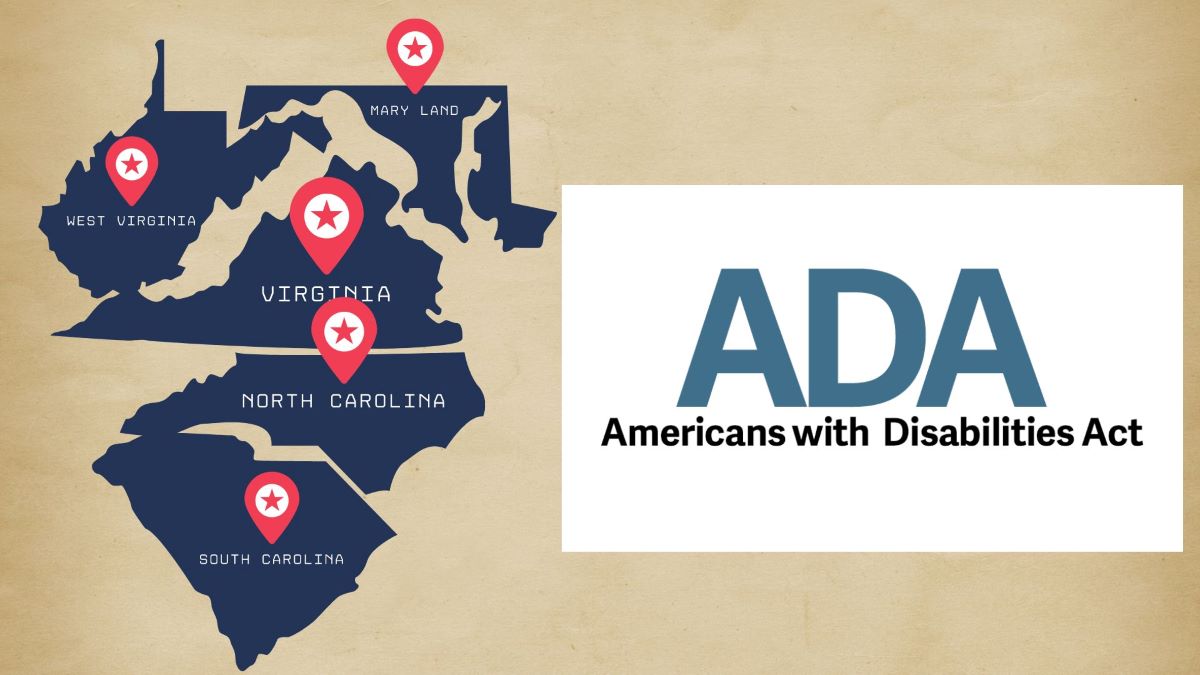
In a summer marked by significant and far-reaching Supreme Court decisions,[1] the Court denied a consequential petition for certiorari in the Fourth Circuit case of Williams v. Kincaid.[2] The denial allowed a landmark ruling, which permitted “gender dysphoria” to qualify as a disability under the Americans with Disabilities Act (ADA),[3] to endure as good law in Maryland, West Virginia, Virginia, North Carolina, and South Carolina.[4] In the months following, the Williams Court’s reasoning has influenced several other federal courts to adopt similar positions when presented with the question of whether gender dysphoria is a qualifying disability under the ADA.[5]
II. Williams v. Kincaid
In 2022, the Fourth Circuit decided the case of Williams v. Kincaid.[6] The plaintiff, Kesha Williams, a transgender woman, was an inmate at the Fairfax County Adult Detention Center.[7] The Detention Center originally placed Williams in women’s housing, but later removed her to male housing after she informed the nurse “that she is transgender, suffers from gender dysphoria, and for fifteen years had received hormone medical treatment for her gender dysphoria.”[8] The nurse changed Williams’ records to indicate her sex assigned at birth, “male”, and consequentially, the Detention Center required Williams to wear men’s clothing.[9]
Subsequently, prison officials denied Williams’ prescribed hormone medication for two weeks.[10] Additionally, Williams suffered severe and frequent harassment by both the male inmates she was housed with and the prison deputies.[11] Williams’ requests to be referred to by female pronouns, shower privately, and be searched by female officers were met with hostile denial.[12] After the conclusion of her incarceration, Williams brought several claims against prison officials, including one under the ADA.[13]
Williams argued she was covered by the ADA because of her diagnosis of gender dysphoria.[14] The defendants argued that gender dysphoria falls outside of the scope of the ADA’s coverage[15] because of a provision prohibiting its application to “transvestism, transsexualism, pedophilia, exhibitionism, voyeurism, gender identity disorders not resulting from physical impairments, or other sexual behavior disorders.”[16] The District Court of Maryland granted the defendants’ motion to dismiss for failure to state a claim for which relief can be granted.[17] On appeal, the Fourth Circuit considered whether gender dysphoria is a “gender identity disorder,” and if so, whether it results from a physical impairment.[18]
The court found that gender dysphoria does not fall within the meaning of gender identity disorders excluded from coverage under the ADA.[19] The Court held that “the ADA excludes from its protection anything falling within the plain meaning of ‘gender identity disorders,’ as that term was understood ‘at the time of enactment.’”[20] In 1990, “at the time of [the ADA’s] enactment,”[21] the Diagnostic and Statistical Manual of Mental Disorders (DSM) did not recognize gender dysphoria as medical diagnosis, but it did recognize a class of gender identity disorders.[22] As the medical and scientific community’s understanding advanced, the American Psychiatric Association (APA) removed gender identity disorders from the DSM in 2013.[23] At the same time, the APA added the diagnosis of gender dysphoria.[24] The court reasoned that this revision by the APA suggested a meaningful difference between the terms “gender identity disorder” and “gender dysphoria.”[25] Significantly, the definitions between the terms differ greatly, with the latter focusing on the “‘clinically significant distress’ felt by some of those who experience ‘an incongruence between their gender identify and their assigned sex.’”[26]
The court went even further in this distinction, ruling that gender dysphoria can result from a physical impairment, marking another way in which the ADA can cover the diagnosis.[27] The court stated that Williams’ claim that she required hormone therapy leads to a reasonable inference of some physical basis for her gender dysphoria.[28] This was enough to satisfy the minimal pleading standards, and enough for Williams to survive a motion to dismiss.[29]
III. The Trend Following Williams and the Future of Gender Dysphoria Under the ADA
Following the Fourth Circuit’s ruling, the defendants’ petitioned the Supreme Court for certiorari to consider the question.[30] The Supreme Court denied the petition for certiorari, allowing the Williams ruling to stand.[31] The question of whether gender dysphoria is covered by the ADA was an issue of “first impression for the federal appellate courts” when the Fourth Circuit considered it.[32] As the question arises in other circuits, the decision in Williams will likely provide significant guidance and persuasive authority to federal courts. The question becomes; will other circuits follow or break from the key holding of Williams?
In the short time since the Fourth Circuit decided Williams in 2022, other federal courts have found the case persuasive.[33] A federal district court in the Middle District of Pennsylvania (located in the Third Circuit) relied heavily on the reasoning used in Williams to hold that a plaintiff could successfully plead facts to allege that their “gender dysphoria results from a physical impairment.”[34] The Western District of New York (located in the Second Circuit) compared the reasoning of the Williams court with that of courts that have ruled the opposite way.[35] That court found the Fourth Circuit’s reasoning persuasive.[36] Additionally, in the District of Colorado (located in the Tenth Circuit), a federal judge declined to defer to his own district’s precedent on the issue because it was outdated. Instead, the judge cited the Williams decision, saying: “the Court finds persuasive a recent thorough and closely reasoned decision by the Fourth Circuit in Williams v. Kincaid[37]Similarly, the District of Oregon (located in the Ninth Circuit) indicated a nod of approval of the Fourth Circuit’s ruling.[38]
Although the Fourth Circuit’s reasoning in Williams has yet to penetrate circuit boundaries up to the appellate court level, it appears to have gained momentum in only a few short months. Including the Fourth Circuit, five federal circuits have now indicated support for the Williams holding.[39] The quick and continued adoption of the Williams holding will likely pique greater interest among the Supreme Court the next time the issue is presented.[40] Ultimately, only time will tell if the Williams holding will become the rule nationwide.
IV. Conclusion
Williams v. Kincaid remains a historic ruling.[41] In the Fourth Circuit, entities covered under the scope of the ADA must provide reasonable accommodations to transgender individuals dealing with gender dysphoria.[42] While circuits outside of the Fourth have not formally adopted the Williams holding, federal district courts in other circuits have shown a willingness to look to Williams for guidance.[43] The question of whether gender dysphoria is a covered disability under the ADA remains unsettled in most circuits,[44] and the Williams ruling may encourage those with grievances to bring claims under the statute. As a result, many more federal courts will have the opportunity to consider the issue. For now, Williams v. Kincaid will continue to be the leading authority,[45] but the issue seems destined for eventual consideration by the Supreme Court.
*Christina Charikofsky is a second-year student at the University of Baltimore School of Law. Christina received her Bachelor’s in Political Science and Economics from Goucher College—where she was a student-athlete and competed as a member of the Women’s Soccer team. After the completion of her first year of law school, Christina was inducted into the Royal Graham Shannonhouse III Honor Society as a Distinguished Scholar. Christina is currently a Staff Editor for the University of Baltimore Law Review, participates on the Honor Board, serves as the Law Scholar for Professor Matthew Lindsay’s Torts course, and works as a Research Assistant to Professor Dionne Koller. Additionally, Christina is currently completing an externship at Kollman & Saucier, P.A. She is excited to be returning to the firm for the summer of 2024.
[1] See, e.g., Biden v. Nebraska, 600 U.S. 477 (2023); 303 Creative LLC v. Elenis, 600 U.S. 570 (2023); Students for Fair Admissions, Inc. v. President & Fellows of Harvard Coll., 600 U.S. 181 (2023); Groff v. DeJoy, 600 U.S. 447 (2023).
[2] Kincaid v. Williams, 143 S. Ct. 2414 (2023).
[3] Williams v. Kincaid, 45 F.4th 759, 769 (4th Cir. 2022), cert. denied, 143 S. Ct. 2414 (2023).
[4] See generally id.
[5] See discussion infra Parts II–III.
[6] Williams, 45 F.4th 759.
[7] Id. at 763.
[8] Id. at 764.
[9] Id.
[10] Id.
[11] Id.
[12] Id. at 764–65.
[13] Id. at 765.
[14] Id.
[15] Id.
[16] 42 U.S.C. § 12211(b)(1).
[17] Williams, 45 F.4th at 765.
[18] Id. at 766.
[19] Id. at 769.
[20] Id. at 766.
[21] Id. at 769 (quoting Bostock v. Clayton Cty., 140 S. Ct. 1731, 1750 (2020)).
[22] Id. at 767.
[23] Id.
[24] Id.
[25] Id. at 767, 769.
[26] Id. at 768.
[27] Id. at 770.
[28] Id. at 770–71.
[29] Id. at 770.
[30] Petition for a Writ of Certiorari, Kincaid v. Williams, 143 S. Ct. 2414 (2023) (No. 22-633).
[31] Kincaid, 143 S. Ct. 2413.
[32] Williams, 45 F.4th at 766.
[33] See infra notes 33–37 and accompanying text.
[34] Guthrie v. Noel, No. 1:20-CV-02351, 2023 U.S. Dist. LEXIS 161325, at *27–40 (M.D. Pa. Sep. 11, 2023).
[35] Kozak v. CSX Transp., Inc., No. 20-CV-1845, 2023 U.S. Dist. LEXIS 133299, at *13–16 (W.D.N.Y. Aug. 1, 2023).
[36] Id. at *15.
[37] Griffith v. El Paso Cnty., No. 21-cv-00387-CMA-NRN, 2023 U.S. Dist. LEXIS 32186, at *46–47 (D. Colo. Feb. 27, 2023), adopted by 2023 U.S. Dist. LEXIS 74698.
[38] Gibson v. Cmty. Dev. Partners, No. 3:22-cv-454-SI, 2022 U.S. Dist. LEXIS 189828, at *20 (D. Or. Oct. 18, 2022) (“The Ninth Circuit has not addressed these categorical exclusions. The Fourth Circuit, however, recently held that as a matter of statutory construction, gender dysphoria is not a gender identity disorder, and so nothing in the ADA compels the conclusion that gender dysphoria is excluded from ADA protection. The Court need not determine whether gender dysphoria constitutes a disability under the ADA or Rehabilitation Act to decide Defendants’ motion. Assuming without deciding that gender dysphoria is a disability. . . .” (internal citations omitted)).
[39] See id.; Griffith, 2023 U.S. Dist. LEXIS 32186, at *46–47; Kozak, 2023 U.S. Dist. LEXIS 133299, at *13–16; Guthrie, 2023 U.S. Dist. LEXIS 133299, at *13–16.
[40] See Kincaid v. Williams, 143 S. Ct. 2414, 2415 (2023) (Alito, J., dissenting).
[41] See discussion supra Part I.
[42] See Williams v. Kincaid, 45 F.4th 759, 769 (4th Cir. 2022), cert. denied, 143 S. Ct. 2414 (2023); 42. U.S.C. §§ 12101–12213.
[43] See Gibson, 2022 U.S. Dist. LEXIS 189828, at *20; Griffith, 2023 U.S. Dist. LEXIS 32186, at *46–47; Kozak, 2023 U.S. Dist. LEXIS 133299, at *13–16; Guthrie, 2023 U.S. Dist. LEXIS 133299, at *13–16.
[44] See Williams, 45 F.4th at 766 (“[T]he district court held, that the exclusion for ‘gender identity disorders not resulting from physical impairments’ applied to . . . gender dysphoria and barred . . . ADA claim[s]. Whether this is so constitutes a question of first impression for the federal appellate courts.”).
[45] See id.

