Blindsided: Undoing a Nineteen-Year Conservatorship Between Michael Oher and the Tuohy Family.

*Amanda Fruman

Michael Oher, ex-National Football League (NFL) tackle and the inspiration for the movie The Blindside (2009), is making headlines in 2023 as a probate court recently ended his 19-year conservatorship with the Tuohy family.[1] The tensions evident between Oher’s petition and the Tuohy’s acknowledgment that they would release Oher from the conservatorship can point to the deeper implications of the white savior trope portrayed in the film.[2]

The 2009 film starring Quinton Aaron as Michael Oher portrayed the story of Oher, a homeless high school teen living in Memphis, Tennessee with enormous football potential.[3] The film follows Oher through his senior year of high school, where he was “adopted” by the Tuohy family, and depicts the family helping him understand football and navigate college prospects, ultimately landing him a spot on the Ole Miss roster.[4] While the feel-good film achieved immense success, Oher’s lawsuit in the Probate Court of Shelby County, Tennessee,[5] represented a different picture of the relationship between Oher and the Tuohy family.

I. Oher’s Petition

Oher filed a Petition to Terminate Conservatorship, for Accounting, and Other Relief on August 14, 2023.[6] The petition alleged that the Tuohys urged Oher to sign the papers granting the family authority over Oher’s medical and financial decision-making when he was beginning his time at Ole Miss.[7] Oher, who was eighteen at the time, alleges he was under the guise that the conservatorship amounted to adoption.[8] Now, nineteen years later, Oher discovered he was never adopted and further argues he was swindled out millions in profits from The Blindside film.[9]  Through their attorney, however, the Tuohy family stated that “[i]n reality, the Tuohys opened their home to Mr. Oher, offered him structure, support and, most of all, unconditional love[.]”[10] Yet the Tuohy family attorney also acknowledged that they would release Oher from the conservatorship amid these allegations.[11] While the Tuohys’ legal argument to justify profiting from Oher’s life story poses interesting questions, this article more thoroughly discusses how closing a conservatorship impacts former conservatees.[12] 

II. Tennessee Law

Tennessee law § 34-1-101(4)(B) defines conservatorship as:

A proceeding in which a court removes the decision-making powers and duties, in whole or in part, in a least restrictive manner, from a person with a disability who lacks capacity to make decisions in one or more important areas and places responsibility for one or more of those decisions in a conservator or co-conservators.[13]

Subsection (14) of the statute further defines a “person with a disability” as “any person. . . determined by the court to be in need of partial or full supervision, protection, and assistance.”  The subsection further lists “mental illness, physical illness or injury, developmental disability, or other mental or physical incapacity[,]” as disabilities.[14] 

A conservatorship is dramatically different from the adoption narrative sold by the film and the Tuohys. Although Oher was eighteen when he signed the conservatorship, Tennessee Law permits adults to be adopted instead of signed into a conservatorship.[15] Adoption does not require adoptees to relinquish their right to make decisions for themselves or require a documented physical or mental disability, whereas conservatorships demand both.[16] Thus, an adopted adult retains the ability to contract and perform adult functions without the consent of the conservators—making adult adoptions often symbolic more so than anything else.[17] In Oher’s case, he argues the conservatorship was tactically used to shield the Tuohy family from involving Oher in business decisions about the film, effectively sidelining him from its profits.[18]  And while a conservatorship in Tennessee requires a showing that the conservatee has a proven disability, there is no indication from Oher that he ever qualified as a person with a disability.[19]

III. Case Outcome

In response to Oher’s request, on September 29, 2023, Shelby County Probate Court Judge Kathleen Gomes ended the 2004 conservatorship.[20] Judge Gomes also did not dismiss Oher’s suit against the family seeking accounting information regarding Oher’s finances during the nineteen year period.[21] Judge Gomes further stated her shock that the conservatorship was created, remarking that “[she] cannot believe it got done.”[22] She also shared that she had never seen “such a conservatorship used for someone who is not disabled, and that it should have been dissolved a long time ago.”[23] 

IV. Conclusion: Broader Implications of Hollywood’s Portrayal of Oher’s Story

The filings from both parties and subsequent termination of the conservatorship suggest a fraught relationship between Oher and the Touhys, illustrative of how Hollywood’s use of the white savior trope often perpetuates a narrative that victimizes people of color.[24]

Oher’s allegations called to light the true story behind the idealized film, which painted him as unable to read and write as a high school senior, into the spotlight.[25] Yet in reality, Oher maintained his grades throughout high school and completed a college-level degree before joining the NFL.[26]  

With the renewed attention surrounding Oher’s story and subsequent film, the termination of the conservatorship serves as a reminder that Hollywood portrayals of real-life events may perpetuate harmful tropes and further encourages viewers to reexamine this film’s narrative.[27]   

*Amanda Fruman is a second-year student at the University of Baltimore School of Law. At school, she enjoys being a Law Review Staff Editor, a member of the Law School’s Honor Board, a University-Wide Conduct Board Member, and a teaching assistant to Professor Amy Sloan. During her first-year summer, Amanda served as a judicial intern to the Honorable Chief Justice Matthew Fader at the Supreme Court of Maryland. In May, she is excited to join Miles and Stockbridge as a summer associate.  


[1] Chris Bumbaca, ‘The Blind Side’ Subject Michael Oher’s Blockbuster Lawsuit Against Tuohy Family Explained, USA Today (Aug. 15, 2023, 12:46 PM), https://www.usatoday.com/story/sports/nfl/2023/08/15/michael-oher-conservatorship-what-to-know-about-blind-side-lawsuit/70594251007/.

[2] See infra text accompanying notes 6–19.

[3] Summary of The Blind Side, IMDB, https://www.imdb.com/title/tt0878804/?ref_=ttpl_ov_i (last visited Sept. 4, 2023).

[4] Id.

[5] Brief of Petitioner, In Re: Michael Jerome Williams, Jr., No. C-010333 (Probate Ct. Shelby County, TN 2023).  

[6] Id. at 1.    

[7] Id. at 7–8.

[8] Id. at 3–4.

[9] Id. at 4–5.

[10] Michael A. Fletcher, Tuohys Dispute Michael Oher Claims, Allege ‘Shakedown Effort’,ESPN (Aug. 15, 2023, 7:43 PM), https://www.espn.com/nfl/story/_/id/38199104/tuohy-family-disputes-michael-oher-claims-alleges-shakedown-blind-side-subject.

[11] Id.

[12] See infra Part III.

[13] Tenn. Code Ann. § 34-1-101(4)(B) (West 2023).

[14] Id. § 34-1-101(14).

[15]  Id. § 36-1-102(8) (“‘Adult’ means any person who is eighteen (18) years of age or older. An adult may be adopted as provided in this part[.]”).

[16]  See generally, id. § 36-1-101. 

[17]  Id.

[18] Brief of Petitioner at 4–5, In Re: Michael Jerome Williams, Jr., No. C-010333 (Probate Ct. Shelby County, TN 2023).  

[19] Brief of Petitioner at 4, In Re: Michael Jerome Williams, Jr., No. C-010333 (Probate Ct. Shelby County, TN 2023).

[20] Ayana Archie, A Judge Orders the End of the Conservatorship Between Michael Oher and the Tuohys, NPR (Sept. 29, 2023, 7:41 PM), https://www.npr.org/2023/09/29/1202776970/michael-oher-tuohys-conservatorship.

[21] Id.

[22] Id.

[23] Id.

[24] See generally Aisha Harris, ‘The Blind Side’ Drama Just Proves the Cheap, Meaningless Hope of White Savior Films, NPR (Aug. 18, 2023, 11:10 AM), https://www.npr.org/2023/08/18/1194535397/the-blind-side-michael-oher-white-savior; Erin Ash, Racial Discourse in “The Blind Side”: The Economics and Ideology Behind the White Savior Format, 35 Stud. in Popular Culture, Fall 2015, at 85–93; Andrew Lawrence, The Blind Side’s White Savior Tale was Always Built on Shaky Ground, The Guardian (Aug. 16, 10:09 AM), https://www.theguardian.com/sport/2023/aug/16/blind-side-white-savior-story-tuohy-michael-oher-conservatorship.

[25] Lawrence, supra note 20. 

[26] Id.

[27]  See generally Char Adams, Why Hollywood Embraced White Savior Movies like ‘The Blind Side’, NBC News (Aug. 18, 2023, 2:59 PM), https://www.nbcnews.com/news/nbcblk/hollywood-embraced-white-savior-movies-blind-side-rcna100413.


A Self-Driven Disaster: Tesla on Trial

*Brianna Watts

I. Introduction

Tesla Inc. (Tesla) is currently facing its first two trials of likely many following allegations that the “Autopilot” driver assistance feature failed and led to the death of two individuals in 2019.[1] The first trial, scheduled for mid-September, is a California civil suit involving the death of Micha Lee.[2] Lee, the owner of a Model 3[3] Tesla, was using the Autopilot system on a Los Angeles highway when the car suddenly veered off the highway at sixty-five miles per hour, struck a tree, caught in flames, and ultimately killed Lee, while seriously injuring the other two passengers.[4] Lee’s estate and the injured passengers filed the lawsuit, alleging that Tesla knew the Autopilot system was defective when the car was sold.[5] The second trial, scheduled for early October,  is a Florida civil suit involving the death of Stephen Banner.[6] Banner, also the owner of a Tesla Model 3, was driving in Miami using the Autopilot feature when the car traveled under the trailer of an eighteen-wheeler truck, tearing off the roof of the vehicle, and ultimately killing Banner.[7] Tesla disputed liability in both accidents, citing driver error and relying on the requirement that the driver must monitor the Autopilot assistance feature when in use to ensure safety.[8] In court documents, Tesla stressed that “[t]here are no self-driving cars on the road today.”[9]

II. History

Once only a dream in the works of science fiction, automated vehicles[10] have been around since the late 1970s.[11] As the number of vehicles with automated driving systems on the roads increased, it was not long before accidents associated with this feature occurred.[12] In 2022, nearly 400 reported vehicular crashes involved partially automated driving systems–273 of which included Teslas.[13] Tesla, a leader in the industry since its founding in 2003,  put cars with the Autopilot feature on the market in 2015.[14] The first deadly accident in the United States involving the driver assistance feature reportedly occurred in 2016, but the case never went to trial.[15]

As recently as April 2023, Tesla successfully defended its first suit relating to a crash allegedly caused by the automated driving software (albeit non-fatal).[16] Justine Hsu, the owner of a Model S[17] Tesla, alleged in the California civil suit that defects in the Autopilot driver assistance feature (as well as the airbag), caused her vehicle to swerve into a curb, deploying the airbag “so violently” it broke Hsu’s jaw, knocked out her teeth, and caused nerve damage in her face.[18] Tesla rejected any liability, citing the user manual’s warning against using Autopilot on city streets.[19] The jury sided with Tesla and awarded Hsu zero damages.[20]

III. Implications

The question of how autonomy implicates liability in the case of motor vehicle accidents is an interesting and novel legal issue. The National Highway Traffic Safety Administration (NHTSA) has detailed the “evolution of automated technologies” and the five levels of automation ranging between “momentary driver assistance” and “full automation.”[21] Under levels zero to two, where the technology is available on vehicles for consumer purchase, the NHTSA makes it clear: “You, as the driver, are responsible for driving the vehicle.”[22] Teslas have achieved level two.[23] Of note, the safety benefits listed for advanced driver assistance systems include “assist[ing] a driver by anticipating imminent dangers and working to avoid them.”[24] Ironically, it is not always safety that results from the use of these driver “assistance” features, as shown by the Tesla suits from this year alone. Thus, the NHTSA is currently checking the safety of these self-driving vehicles through its “Standing General Order on Crash Reporting,” amended in April 2023, which requires “identified manufacturers and operators” to report to the NHTSA crashes involving vehicles “equipped with automated driving systems.”[25] 

The cases involving Lee and Banner bothconcernmotor vehicle accidents where the Autopilot feature was involved, in the same model Tesla, each of which resulted in death to the driver. Considering Tesla’s recent success with the Hsu case, and a different model Tesla at issue, it may seem as though things are looking up for the company. However, with higher stakes, fatalities involved, and a lack of caselaw to guide magistrates and advocates, the courts’ verdicts are hard to anticipate.

IV. Conclusion

The NHTSA states that “[i]t is vital to emphasize that drivers will continue to share driving responsibilities for the foreseeable future.”[26] Current CEO Elon Musk predicts that Tesla will achieve “fully autonomous vehicles” sometime later this year.[27] For some, this is a scary thought, and for others, this is a dream come true. As insurance companies, local governments, and legislators grapple with the legal consequences of drivers utilizing these driver assistance features, technology continues to advance. These trials will likely have unprecedented consequences on developing governance for the nascent tech of the autonomous vehicle industry, regardless of result.

*Brianna Watts is a second-year day student at the University of Baltimore School of Law. After her first year, Brianna was inducted into the Royal Graham Shannonhouse III Honor Society. Brianna is currently a Law Review Staff Editor, an American Association for Justice Trial Team member, and a 2L Representative for the Criminal Law Association. During her first-year summer, Brianna participated in the Scotland study abroad program and served as a judicial intern to the Honorable Beau H. Oglesby and the Honorable Brian D. Shockley at the Circuit Court for Worcester County in her hometown of Ocean City, Maryland.


[1] Dan Levine & Hyunjoo Jin, Focus: Tesla Braces For its First Trial Involving Autopilot Fatality, Reuters (Aug. 28, 2023, 12:59 PM), https://www.reuters.com/business/autos-transportation/tesla-braces-its-first-trial-involving-autopilot-fatality-2023-08-28/.

[2] Id.

[3] For more information on the Model 3, see Model 3, Tesla, https://www.tesla.com/model3 (last visited Sep. 3, 2023).

[4] Levine & Jin, supra note 1.

[5] Id.

[6] Id.

[7] Id.

[8] Id.

[9] Id.

[10] In following the practice of the NHTSA, when referring to vehicles with capabilities “where a traditional driver would no longer be needed,” I use the phrase “automated vehicles,” or vehicles with “automated driving systems.” For more information, see Automated Vehicles for Safety, Nat’l Highway Traffic Safety Admin., https://www.nhtsa.gov/technology-innovation/automated-vehicles-safety#the-topic-safety-timeline (last visited Oct. 18, 2023). 

[11] A Brief History of Autonomous Vehicle Technology, Wired, https://www.wired.com/brandlab/2016/03/a-brief-history-of-autonomous-vehicle-technology/ (last visited Sep. 3, 2023).

[12] Tom Krishner, US Report: Nearly 400 Crashes of Automated Tech Vehicles, Associated Press, June 15, 2022, https://apnews.com/article/self-driving-car-crash-data-ae87cadec79966a9ba56e99b4110b8d6.

[13] Id.

[14] Tesla: A History of Innovation (and Headaches), Forbes (Sep. 29, 2022, 4:12 PM), https://www.forbes.com/sites/qai/2022/09/29/tesla-a-history-of-innovation-and-headaches/.

[15] Abhirup Roy et al., Tesla Wins Bellwether Trial Over Autopilot Car Crash, Reuters (Apr. 22, 2023, 5:43 AM), https://www.reuters.com/legal/us-jury-set-decide-test-case-tesla-autopilot-crash-2023-04-21/.

[16] Id.

[17] For more information on the Model S, see Model S, Tesla, https://www.tesla.com/models (last visited Sep. 3, 2023).

[18] Roy et al., supra note 14.

[19] Id.

[20] Id.

[21] Automated Vehicles for Safety, supra note 10.

[22] Id.

[23] Cherise Threewitt, What Does Tesla’s Full-Self Driving Mode Do?, U.S. News, (Aug. 22, 2023, 4:00 PM), https://cars.usnews.com/cars-trucks/advice/tesla-full-self-driving.

[24] Id.

[25] Standing General Order on Crash Reporting, Nat’l Highway Traffic Safety Admin., https://www.nhtsa.gov/laws-regulations/standing-general-order-crash-reporting (last visited Sep. 3, 2023).

[26] Automated Vehicles for Safety, supra note 10.

[27] Robert Hart, Elon Musk Predicts Tesla Self-Driving Cars Will Arrive ‘This Year’, Forbes (Jul. 6, 2023, 6:13 AM), https://www.forbes.com/sites/roberthart/2023/07/06/elon-musk-predicts-tesla-self-driving-cars-will-arrive-this-year/.

RICO Resurgence: How State Statutes are Bringing RICO Back.

*Andrea Hutton

I. Introduction

In the first episode of The Sopranos, Tony Soprano laments to his therapist that “[he’s] not getting any satisfaction from [his] work.”[1] When his therapist asks why, Tony says, “[a]ll because of RICO,” clarifying that RICO is not a family member, but a statute.[2] Many Americans are familiar with the Racketeer Influenced and Corrupt Organizations Act (RICO) because of its association with the Mafia. However, states’ recent use of RICO statutes have many Americans wondering, what are these statutes and how do they connect mob bosses and former presidents?

II. Cultural and Legislative History

The Mafia grabbed the attention of America after the arrival of the first known member of the Sicilian Mafia in 1878.[3] The Mafia and other organized crime entities grew in sophistication when the passage of the Eighteenth Amendment created lucrative opportunities to provide alcohol to the public.[4] In the first half of the Twentieth Century, criminal organizations oversaw an array of activities including, “gambling, loan sharking, drug trafficking, extortion, gun running, prostitution, bootlegging, racketeering, money laundering and fraud.”[5] Public awareness of the Mafia grew after World War II, with approximately 30 million people tuning into a televised 1951 Senate committee investigation of organized crime.[6] Twenty years later, President Nixon signed RICO into law as part of the Organized Crime Control Act of 1970 with the purpose of “eradicat[ing] . . . organized crime in the United States by strengthening the legal tools in the evidence gathering process[.]”[7]

III. A Powerful Weapon

To fight the Mafia the federal government needed an arsenal as effective as the organizations it was up against. The RICO statute provides the munitions by attacking the profits of businesses engaging in racketeering activity.[8] The first weapon is the statute’s expansive definition of racketeering activity. Racketeering activity is “any act or threat involving murder, kidnapping, gambling, arson, robbery, bribery, extortion, dealing in obscene matter, or dealing in a controlled substance or listed chemical . . . chargeable under State law and punishable by imprisonment for more than one year.”[9] The statute also includes more than fifty federal offenses considered racketeering activity and “white collar crimes” like “mail fraud, . . . money laundering, and securities fraud.”[10] This definition makes it hard to name a crime that would not constitute racketeering activity.

The statute attacks businesses associated with organized crime by making it both criminally and civilly unlawful for any person to invest money derived from a pattern of racketeering into an enterprise, use a pattern of racketeering to control an enterprise, or conduct the affairs of an enterprise through a pattern of racketeering.[11] The statute also strikes at the planning stages of such endeavors with the inclusion of conspiring to violate the provisions of RICO as another unlawful act.[12] 

The statute allows “unconnected acts,” often completed by different defendants, “to be woven together” to establish the pattern required to form a RICO conspiracy.[13] Conduct forms a pattern when the acts “have the same or similar purposes, results, participants, victims, or methods of commission.”[14] One limit the provision establishes is that the related acts must occur within ten years of each other.[15]

RICO imposes liability on those who are part of an enterprise and know of two or more racketeering activities committed by another member of the enterprise.[16] An enterprise encompasses “any individual, partnership, corporation, association, or other legal entity, and any union or group of individuals associated in fact although not a legal entity.”[17] To prove the enterprise exists, there must be an “ongoing organization, formal or informal” in which the associates of the organization “function as a continuing unit.”[18]

The intentionally broad terms and concepts in the statutes finally gave prosecutors an opportunity to point to connections that resulted in culpability for people who during previous attempts to hold them responsible could say, “Wasn’t me.”[19] Some thought this aspect of the statute granted too much power and sought to narrow its reach.[20] The courts disagreed, holding that “[t]he legislative history clearly demonstrates that the RICO statute was intended to provide new weapons of unprecedented scope for an assault upon organized crime and its economic roots”[21] as evidenced by Congress’s direction that “provisions of this title [should] be liberally construed to effectuate its remedial purposes.”[22] 

IV. Expanding RICO

Once successful RICO cases brought previously untouchable defendants to bay, prosecutors and legislators eyed new ways to expand the statute from its initial focus on the Mafia.[23] The Supreme Court put big business on notice in Sedima, S.P.R. v. Imrex Co., Inc., ruling that “respected and legitimate enterprises” were just as capable of violating RICO as “mobsters and organized criminals” and that Congress intended the statute to be liberally construed, allowing it to reach both types of organizations.[24] Congress expanded the statute during the War on Drugs to go after target gangs and later, to pursue suspected terrorists following the attacks of September 11, 2001.[25] In 2007, the First Circuit ruled that RICO also applied to enterprises that “engaged in noneconomic criminal activity”[26] because a “de minimis effect on interstate commerce is all that is required to satisfy RICO’s commerce element.”[27] In that case, the court held that the enterprise’s purchase of guns manufactured in another state satisfied the interstate commerce element.[28]

V. In the News: The Georgia RICO Statute

Over thirty states followed the federal government’s lead enacting their own “little RICO” statutes.[29] Some state RICO statutes, like the one Georgia enacted in 1980, expand on the federal statute. Unlike the federal statute, the Georgia statute has no “enterprise” requirement—it allows for charges against an individual.[30] Georgia’s RICO statute also provides a broader array of crimes that create a pattern of racketeering activity, including: “the attempt, solicitation, coercion, and intimidation of another to commit any [state] crime which is chargeable by indictment.”[31]

In Atlanta, Fani Willis, the Fulton County District Attorney, is relying on the Georgia statute to bring a dizzying array of RICO indictments.[32] For example, in May 2022, Willis brought fifty-six counts against rappers Young Thug and Gunna along with twenty-six members of the Young Stoner Life Collective.[33] Earlier this year, she brought RICO charges against Donald Trump and eighteen others for their attempts to overturn the 2020 presidential election.[34]

VI. Conclusion

These Willis-led indictments are bringing Georgia’s RICO statute into the popular imagination—like the impact of the earlier Mafia cases under the federal RICO statute. While federal RICO cases successfully brought down Mafiosos and businessmen, state RICO cases are often broad and unwieldy, requiring prosecutors to rely on plea deals to take care of most of the defendants. The eyes of America and the world will, once again, scrutinize RICO statutes when Donald Trump’s case kicks off in October 2023, laying bare the strengths and weaknesses of the Georgia statute and its federal predecessor.

*Andrea Hutton is a second-year day student at the University of Baltimore School of Law, where she is a Staff Editor for Law Review and a member of the Royal Graham Shannonhouse III Honor Society. Andrea received dual bachelor’s degrees from Louisiana State University in Public Relations and Fashion Merchandising. Before law school, she had a nearly 10-year career in digital marketing and business development. Since 2008, Andrea has volunteered with the Hugh O’Brian Youth Leadership Louisiana Seminar, an organization with the mission to create a global community of young volunteers dedicated to a life of leadership, service, and innovation. She served as the Leadership Seminar Chair from 2021-2023, leading a team of more than 20 volunteers to plan and execute the organization’s premiere event, a weekend-long leadership seminar for high school sophomores. In the summer of 2023, Andrea interned in the office of the County Attorney for Montgomery County. She intends to practice real estate law.


[1]           The Sopranos: The Sopranos (HBO television broadcast Jan. 10, 1999).

[2]            Id.

[3]            Sean M. McWeeney, The Sicilian Mafia and Its Impact on the United States, FBI L. Enf’t Bull., Feb. 1987, at 1–2.

[4]            John R. Mitchell, et. al., Beyond the Mob: “Varsity Blues” and DOJ’s Expanding Use of RICO to Prosecute White-Collar Crime, Crim. Just., Fall 2019, at 4.

[5]            Id. at 4–5.

[6]            Id. at 5.

[7]            Id.

[8]            Pamela H. Bucy & Steven T. Marshall, An Overview of RICO, 51 Ala. Law. 283, 284 (1990).

[9]            18 U.S.C. § 1961(1).

[10]           Id.; Bucy & Marshall, supra note 8, at 284.

[11]          § 1962(a)–(c).

[12]          Id. § 1962(d).

[13]          Mitchell, supra note 4, at 5.

[14]          H.J. Inc. v. Nw. Bell Tel. Co., 492 U.S. 229, 240 (1989).

[15]          18 U.S.C. § 1961(5).

[16]           Piper French, An Offer You Can’t Refuse: How a Mob Statute Metastasized, The Drift (July 12, 2023), https://www.thedriftmag.com/an-offer-you-cant-refuse.

[17]            § 1961(4).

[18]            Bucy & Marshall, supra note 8, at 285.

[19]           See Julian Simcock, Recalibrating After Kiobel: Evaluating the Utility of the Racketeer Influenced and Corrupt Organizations Act (“RICO”) in Litigating International Corporate Abuse, 15 CUNY L. Rev. 443, 450.

[20]          See Rusello v. U.S., 464 U.S. 16, 17 (1983).

[21]          Id. at 26.

[22]            Id. at 27.

[23]          See Mitchell, supra note 4, at 7–8.

[24]            Sedima, S.P.R. v. Imrex Co., Inc., 473 U.S. 479, 497–99 (1985).

[25]          See French, supra note 16; see also Mitchell, supra note 4, at 7–8.

[26]            U.S. v. Nascimento, 491 F.3d 25, 30 (1st Cir. 2007).

[27]          Id. at 37.

[28]          Id.

[29]          French, supra note 16.

[30]          Ga. Code Ann. § 16-14-4 (West 2023).

[31]          Ga. Code Ann. § 16-14-3 (West 2023).

[32]         Christina Lee, What (or Who) Is Behind the Rise of RICO?, Atlanta Mag. (June 14, 2023), https://www.atlantamagazine.com/news-culture-articles/what-or-who-is-behind-the-rise-of-rico/.

[33]         Zoe Guy, Everything We Know About YSL’s RICO Case, Vulture (July 22, 2023), https://www.vulture.com/article/ysl-young-thug-gunna-arrest-charges-explained.html.

[34]         Richard Fausset & Danny Hakim, What We Know About the Trump Election Interference Case in Georgia, N.Y. Times (Aug. 14, 2023), https://www.nytimes.com/2023/08/14/us/trump-georgia-election-indictment-what-to-know.html?name=styln-georgia-investigation.

Geofence Warrants: Strict in Theory. Fatal in Fact?

*Philip Glaser

I. Introduction

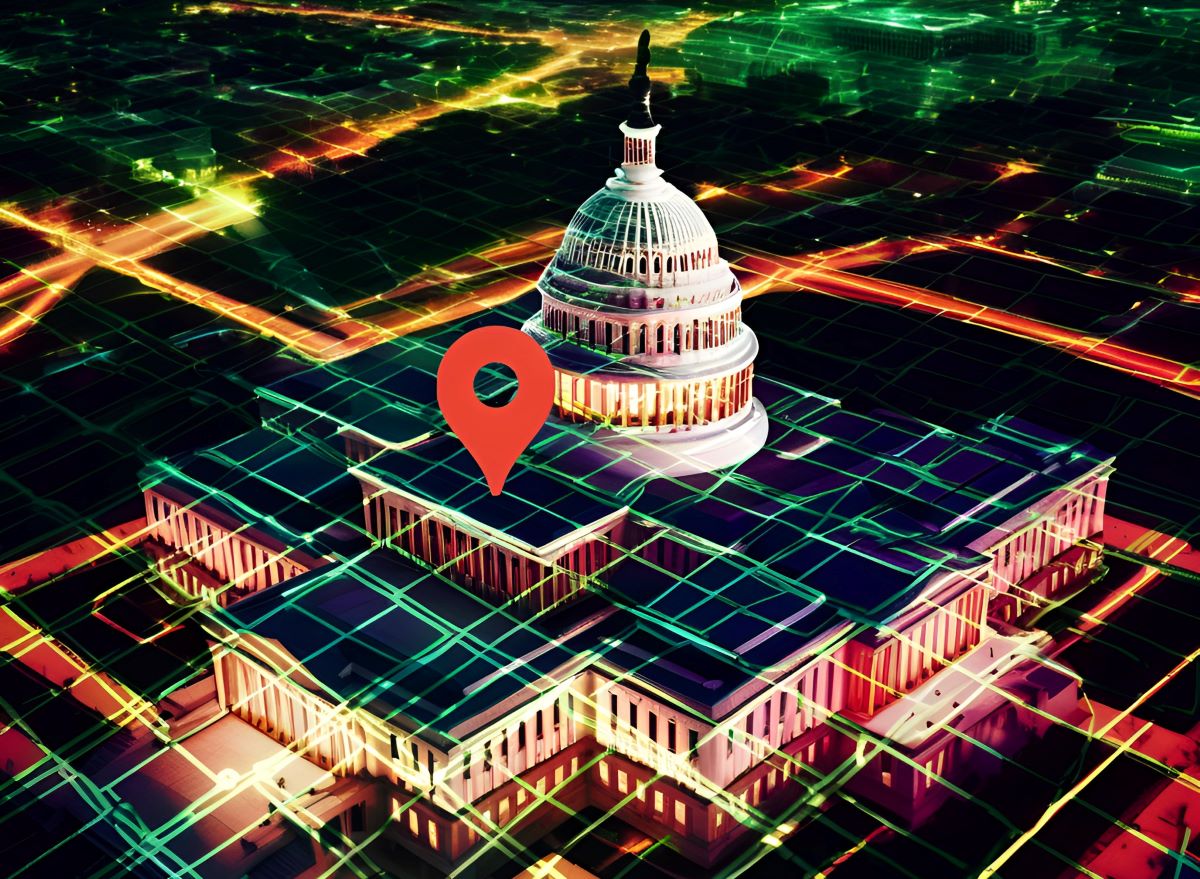
Following the January 6, 2021 incursion on the U.S. Capitol, law enforcement faced a challenge: how could they identify the hundreds of people who entered the Capitol Building in violation of federal law?[1] To put names to faces, the FBI solicited tips,[2] scoured social media,[3] and enlisted assistance from Google.[4] In United States v. Rhine, the U.S. District Court for the District of Columbia reveals in detail how law enforcement pursued a “geofence” warrant, prompting Google to turn over the identities of account holders whose devices were present inside the Capitol in the critical hours of that afternoon.[5] The use of such warrants is not just limited to events of grand historical importance, however. In United States v. Chatrie, the Court of Appeals for the Fourth Circuit will provide the first federal appellate court guidance on the issue of geofence searches more generally, as it addresses whether a bank robbery suspect’s Google Location History should be suppressed on Fourth Amendment grounds.[6] The contrasting analyses of the geofence warrants in Chatrie and Rhine reveal an emerging federal jurisprudence of intense scrutiny that may deter these searches for all but the most extraordinary of circumstances.

II. The Warrant Requirement and Its Exceptions

The Fourth Amendment protects the people “against unreasonable searches and seizures.”[7] However, it does permit such intrusions if they are executed under a warrant based on probable cause “particularly describing the place to be searched, and the person or things to be seized.”[8] To deter infractions of the warrant requirement, the Supreme Court applies the exclusionary rule, which bars the government from using evidence at trial that was seized through a defective warrant.[9] Acknowledging that there are occasions in which the exclusionary rule does not actually serve as a deterrent, the Court also recognizes a good-faith exception: when an officer reasonably relies on a defective warrant, evidence seized under its authority may still be used at trial.[10] By another exception, the third party doctrine, the Court relieves the government of the warrant requirement in instances where the government seeks information from a third party, reasoning that by sharing the sought information with the third party, the defendant can have no legitimate expectation of privacy.[11] As increasingly invasive investigatory methods emerge, enabled by ever-growing amounts of collected user data, the Supreme Court relies on a traditional framework to uphold the Fourth Amendment while recognizing modern manifestations of doctrinal exceptions.[12]

III. The “quagmire of geofence search warrants”[13]

  1. Chatrie Illustrates Fourth Amendment Limits on Geofence Searches

With no federal appellate authority on the matter,[14] the trial judge in Chatrie endeavored to apply Fourth Amendment doctrine to the “previously unimaginable investigatory method” of the geofence search.[15] There, the suspect robbed a bank of $195,000 during business hours.[16] With no leads on the suspect’s identity, law enforcement leveraged the suspect’s observed cell phone use to get a geofence warrant.[17] The warrant compelled Google to reveal location information of all users within a 150-meter radius of the bank in an hour window around the time of the robbery.[18] The trial judge determined that the search warrant was deficient, citing the Fourth Circuit’s rule that warrants “that authorize the search of every person within a particular area must establish probable cause to search every one of those persons.”[19]

Though the broad search did capture the location history of the robbery suspect, it also included others for whom there was no probable cause to search.[20] The court also highlighted that law enforcement improperly sidestepped judicial discretion by failing to follow the multistep process of narrowing down suspect Google accounts described in the warrant.[21] Nevertheless, because the officer who procured the warrant reasonably relied on prior similar warrants, the prosecutor, and the magistrate, the court allowed the government to use the fruits of the defective geofence warrant under the good-faith exception.[22]

B. Rhine Exhibits a Geofence Warrant with Properly Implemented Restraints

In contrast with Chatrie, the trial judge in Rhine found that the January 6th Google geofence search satisfied the warrant requirement due to narrowing measures taken by the government.[23] The government only sought location history for users whose devices were within a geofence area drawn to closely match the interior footprint of the Capitol during the incursion.[24] To filter out devices belonging to those authorized to be in the Capitol, the government also requested control data from times before and after the event, when the building was known to be secure.[25] In addition, the government limited its request to location data points for which the entire error radius[26] fell within the geofence, further decreasing the chance of false positives.[27] The nature of the suspected crime—unauthorized presence—made any match to the above criteria itself evidence of a crime, strongly supporting probable cause for the search.[28] In the end, the government’s narrowing measures reduced a return of 5,723 devices down to 1,535.[29] The court also credited the government’s self-imposed prohibition on requesting deanonymized information from Google without an additional court order, another stark contrast with the process in Chatrie.[30]

V. Conclusion

In its review of the warrant in Chatrie, the Fourth Circuit will have an opportunity to weigh in on what makes a proper geofence warrant, likely taking notes from the Rhine decision. More importantly, however, it will be able to clarify whether individuals have a reasonable expectation of privacy in data obtained by such searches, a matter the trial judges in Rhine and Chatrie declined to decide.[31] Geofence searches represent “‘an almost unlimited pool from which to seek location data,’ such that ‘police need not even know in advance whether they want to follow a particular individual, or when.’”[32] As law enforcement leans more heavily on this unprecedented power, and the excuses for poorly planned and executed warrants afforded by the good-faith exception wear thin, the courts must return to the roots of the Fourth Amendment and extend its protections to the age of surveillance.

*Philip Glaser is a second-year student at the University of Baltimore School of Law and a staff editor for Law Review. He came to law school after a decade-long career in education. In the summer of 2023, Philip worked as a judicial intern for Hon. Brendan A. Hurson at the U.S. District Court for the District of Maryland. In the fall, he is serving as a Law Scholar for Professor Dolin’s Torts class. Philip intends to practice at the intersection of criminal defense and civil rights.


[1] Spencer S. Hsu, Justice Dept. Calls Jan. 6 ‘Capitol Attack’ Probe One of Largest in U.S. History, Expects at Least 400 to Be Charged, Wash. Post (Mar. 12, 2021, 7:28 PM), https://www.washingtonpost.com/local/legal-issues/capitol-attack-investigation-largest/2021/03/12/5c07b46c-833d-11eb-9ca6-54e187ee4939_story.html.

[2] Kevin Collier, Selfies, Social Media Posts Making it Easier for FBI to Track Down Capitol Riot Suspects, NBC News (Jan. 16, 2021, 6:34 PM), https://www.nbcnews.com/tech/social-media/selfies-social-media-posts-making-it-easier-fbi-track-down-n1254522.

[3] Id.

[4] Mark Harris, How a Secret Google Geofence Warrant Helped Catch the Capitol Riot Mob,Wired(Sep. 30, 2021, 7:00 AM),https://www.wired.com/story/capitol-riot-google-geofence-warrant/.

[5] United States v. Rhine, No. 21-0687, 2023 WL 372044, at *1 (D.D.C. Jan. 24, 2023).

[6] United States v. Chatrie, 590 F.Supp.3d 901 (E.D. Va. 2022), appeal docketed, No. 22-04489 (4th Cir. Aug. 29, 2022).

[7] U.S. Const. amend. IV.

[8] Id.

[9] Weeks v. United States, 232 U.S. 383, 398 (1914);Mapp v. Ohio, 367 U.S. 643, 655 (1961).

[10] United States v. Leon, 468 U.S. 897, 922 (1984).

[11] Smith v. Maryland, 442 U.S. 735, 744–46 (1979).

[12] See, e.g., Katz v. United States, 389 U.S. 347 (1967); United States v. Jones, 565 U.S. 400 (2012); Carpenter v. United States, 138 S. Ct. 2206 (2018).

[13] United States v. Rhine, No. 21-0687, 2023 WL 372044, at *22 (D.D.C. Jan. 24, 2023) (quoting United States v. Davis, No. 21-101, 2022 WL 3009240, at *9 (M.D. Ala. Jul. 1, 2022)).

[14] See United States v. Chatrie, 590 F.Supp.3d 901, 906 (E.D. Va. 2022), appeal docketed, No. 22-04489 (4th Cir. Aug. 29, 2022) (noting a “dearth of case law addressing geofence warrants”).

[15] Id. at 905.

[16] Id. at 917.

[17] Id.

[18] Id. at 917–19.

[19] Id. at 927.

[20] Id.

[21] Id. at 927, 934 n.44 (“Det. Hylton returned the warrant before it was served, improperly requested Step 2 and 3 information simultaneously, failed at first to narrow his request at Step 2, and incorrectly tried to add a Step 4 to the process.”)

[22] Id. at 937–38.

[23] United States v. Rhine, No. 21-0687, 2023 WL 372044, at *27 (D.D.C. Jan. 24, 2023).

[24] Id. at *18, *29.

[25] Id. at *29.

[26] See id. at *18 (explaining that a location data point’s error radius describes a circle containing the user’s actual location with 68% certainty).

[27] Id. at *30.

[28] Id. at *29.

[29] Id. at *30.

[30] Id. at *32.

[31] Id. at *28; United States v. Chatrie, 590 F.Supp.3d 901, 925 (E.D. Va. 2022), appeal docketed, No. 22-04489 (4th Cir. Aug. 29, 2022).

[32] Id. at *22 (quoting Leaders of a Beautiful Struggle v. Balt. Police Dep’t, 2 F.4th 330, 342 (4th Cir. 2021) (en banc).

Restricting Gun Ownership for People Under Domestic Violence Protective Orders: Violation of the Second Amendment or Rooted in History?

*Collin Riley

I. Introduction

In adopting the Second Amendment, the people of the United States of America also embraced a persistent question: to what extent can the government restrict an individual’s right to bear arms? The answer to this dilemma remains unclear, due to difficulty in balancing the competing interests of promoting public safety and protecting the fundamental rights of the people.[1] This Term, the Supreme Court will hear the case of United States v. Rahimi, in which Rahimi challenges a federal statute prohibiting firearms possession by individuals subject to a domestic violence protective order.[2] A ruling in favor of Rahimi that finds the statute unconstitutional could open the floodgates for further constitutional challenges—similar to how N.Y. State Rifle & Pistol Ass’n, Inc. v. Bruen opened the door for Rahimi.[3]

II. To Heller and Back: The New Old Test for Analyzing Second Amendment Challenges

In June 2008, the Supreme Court ruled on District of Columbia v. Heller, which involved a challenge to gun-control statutes enforced in D.C. prohibiting the possession of usable handguns in a home.[4] In concluding that the statutes violated the Second Amendment,[5] the Court first determined that the Second Amendment’s text covered Heller’s conduct.[6] Next, the Court conducted an in-depth historical analysis to determine if the disputed regulation was consistent with this Nation’s established tradition of firearm regulation.[7]

Two years later, the Supreme Court reaffirmed its decision in Heller when ruling on the case of McDonald v. Chicago.[8]In McDonald, the Court concluded that the Fourteenth Amendment incorporates[9] the Second Amendment right to keep and bear arms for the purpose of self-defense.[10] Following the decisions in Heller and McDonald, the Courts of Appeals developed a two-step approach for analyzing Second Amendment challenges.[11] The method consisted of a historical analysis of the challenged text followed by a means-end scrutiny test.[12] The courts employed this two-part test for years until the Supreme Court decided Bruen in 2021.[13]

In Bruen, the Court held that the Courts of Appeals were mistaken when they included a means-end scrutiny test in their analysis of Second Amendment challenges.[14] Justice Thomas explained that the Court declined to engage in means-end scrutiny in Heller because the “very enumeration of the right takes out of the hands of government—even the Third Branch of Government—the power to decide on a case-by-case basis whether the right is really worth insisting upon.”[15] The decision in Bruen reinstated the historical inquiry outlined in Heller, which assesses whether modern firearms regulations are consistent with the Second Amendment’s text and historical understanding.[16]

III. United States v. Rahimi

Zackey Rahimi challenged the constitutionality of a federal statute that prohibits the possession of firearms by individuals subject to a domestic violence protective order.[17] The lower court and a Fifth Circuit Court of Appeals panel swiftly shot down Rahimi’s argument under the pre-Bruen two-step test.[18] However, after the Bruen decision, the panel withdrew its opinion, and the Fifth Circuit re-evaluated Rahimi’s challenge.[19] The court analyzed the statute through a historical lens, without any means-end inquiry, and subsequently found it unconstitutional.[20]

The United States petitioned the Supreme Court, which granted certiorari to hear the case.[21] In its brief accompanying the petition, the United States argues that the Fifth Circuit erred in its historical analysis of the challenged statute.[22] The crux of the United States’ argument is that “the Second Amendment allows Congress to disarm persons who are not law-abiding, responsible citizens.”[23] The United States disputes the Fifth Circuit’s conclusion that the phrase “law-abiding, responsible citizens” was used as shorthand, in Heller, to explain long-standing traditions of prohibiting the possession of firearms by felons and the mentally ill or laws forbidding firearms in places like schools and government buildings.[24] Instead, the United States asserts that people have understood the phrase to grant the government discretion in disarming “individuals whom they have found to be dangerous, irresponsible, or otherwise unfit to possess arms.”[25] The United States’ brief included research highlighting the dangers associated with persons subject to domestic violence protective orders possessing firearms.[26] Stressing the increased risks of harm to domestic violence victims, the United States argue that persons subject to protective orders for domestic violence are definitively “not responsible” and, therefore, forfeit their right to bear arms under the Second Amendment.[27]

IV. Conclusion: What Lies on the Horizon?

In its upcoming Term, the same conservative-leaning Supreme Court that issued the Bruen decision will render a decision in Rahimi.[28] The Court will employ an in-depth historical analysis of the challenged statute, consistent with the Heller and Bruen decisions, which will affect the 48 jurisdictions in the United States that permit the restriction of gun possession by persons subject to protective orders.[29] All of these statutes could be called into question, should the Court rule in favor of Rahimi. Other statutes that impose restrictions on Second Amendment rights will likely face challenges as well. For example, other provisions from the statute challenged in Rahimi contain firearm prohibitions for individuals convicted of a crime punishable by imprisonment for a term exceeding one year, for unlawful users of any controlled substances, and for individuals dishonorably discharged from the Armed Forces.[30] Regardless of the efficacy of the policy behind these statutes, a decision in favor of Rahimi could call into question the constitutionality of their enforcement.

*Collin Riley, currently in his second year as a day student at the University of Baltimore School of Law, holds the role of Staff Editor for the Law Review and membership in the Royal Graham Shannonhouse III Honor Society. In the course of his 1L summer, he undertook a rewarding internship at Cochran and Chhabra, a distinguished law practice located in Annapolis, MD.

Before embarking on his legal journey, Collin honed his skills in culinary arts, making contributions to several prominent Baltimore restaurants. Looking ahead, Collin envisions his future firmly rooted in the Baltimore community, with aspirations to contribute meaningfully to its betterment upon his graduation. 


[1] Katherine Shaeffer, Key Facts About Americans and Guns, Pew Research Center (Sep. 13, 2021),  https://pewrsr.ch/48hGvdx.

[2] United States v. Rahimi, 61 F.4th 443 (Pincite) (5th Cir. 2023), cert. granted, 143 S. Ct. 2688 (2023) (No. 22-915).  

[3] Rahimi, 61 F.4­th at 448.

[4] D.C. v. Heller, 554 U.S. 570, 573 (2008).

[5] Id. at 635.

[6] Id. at 628. Dick Heller, a D.C. special police officer, filed a lawsuit in the Federal District Court for the District of Columbia, on Second Amendment grounds after he was denied a registration certificate for a handgun he wished to keep at his home. Id. at 575–576.

[7] Id. at 619–28.

[8] McDonald v. City of Chicago, 561 U.S. 742, (791) (2010).

[9] Incorporation into the 14th amendment means that a provision of the US bill of rights– in this case the 2nd amendment– is applicable to the states through the Due Process clause of the 14th Amendment. See id. at 758.

[10] Id. at 791.

[11] N.Y. State Rifle & Pistol Ass’n v. Bruen, 142 S. Ct. 2111, 2125 (2022).

[12] Id. at 2126, 2129. Means-end scrutiny tests, such as strict or intermediate scrutiny, are interest-balancing tests aimed at determining whether the burden placed by statutes on protected interests is proportionate to the government’s intended benefits. Id. at 2129.

[13] Id. at 2127.

[14] Id.

[15] Id. at 2129.

[16] Id. at 2127.

[17] United States v. Rahimi, 61 F.4th 443, 448 (5th Cir. 2023), cert. granted, 143 S. Ct. 2688 (2023) (No. 22-915).

[18] Id. at 449.

[19] Id.

[20] Id. at 461.

[21] Rahimi, 143 S. Ct. 2688.

[22] Brief for Petitioner at 41–44., United States v. Rahimi, 143 S. Ct. 2688 (2023) (No. 22-915).

[23] Id. at 6.

[24] Rahimi, 61 F.4th at 452.

[25] Brief for Petitioner, supra note 22, at 7.

[26] Id. at 29–32.

[27] Id.

[28] Rahimi, 143 S. Ct. at 2689.

[29] Brief for Petitioner, supra note 22, at 35.

[30] 18 U.S.C. § 922(g). Subsection 3 of the statute prohibits the possession of firearms for any person “who is an unlawful user of or addicted to any controlled substance.” 18 U.S.C. § 922(g)(3). According to an update by the National Conference of State Legislatures, as of April 24, 2023, 38 states, three territories, and D.C. allow medical cannabis use, many opting for adult recreational use. See Nat’l Conf. of State Legislatures, State Medical Cannabis Laws (Jun. 22, 2023), https://www.ncsl.org/health/state-medical-cannabis-laws. As most states trend towards acceptance of regulated cannabis consumption (federally a Schedule 1 controlled substance), the question of whether the prohibition of gun ownership for cannabis users is constitutional emerges. See also 21 U.S.C. § 812(c)(c) (listing hallucinogenic substances classified as Schedule 1).