Addressing Racial Disparities in Maryland’s Juvenile Justice System: What the Juvenile Restoration Act Could Mean for Maryland’s Black Youth Tried as Adults

*Rebecca Odelius

I. Introduction

The United States is the only country that allows convicted criminals to serve a life sentence without parole for crimes they committed under the age of eighteen.[1] Over the last sixteen years, several Supreme Court decisions have placed limits on when and how individuals convicted under the age of eighteen can be sentenced to life without parole.[2] On the state level, twenty-five states and the District of Columbia no longer allow life sentences without parole for individuals who committed crimes while younger than eighteen.[3] Those states now include Maryland with the recent passing of the Juvenile Restoration Act, which took effect October 1, 2021.[4]

The Juvenile Restoration Act is one of five bills that made up a police reform package of legislation presented to Governor Hogan in April 2021.[5] Though the governor vetoed three of the bills presented, including the Juvenile Restoration Act, and left two others unsigned, the Maryland General Assembly quickly overrode the vetoes.[6]

Continue reading “Addressing Racial Disparities in Maryland’s Juvenile Justice System: What the Juvenile Restoration Act Could Mean for Maryland’s Black Youth Tried as Adults”
The Future of Climate Change Liability: A Jurisdictional Battle

*Sarah Steinberg

I. Introduction

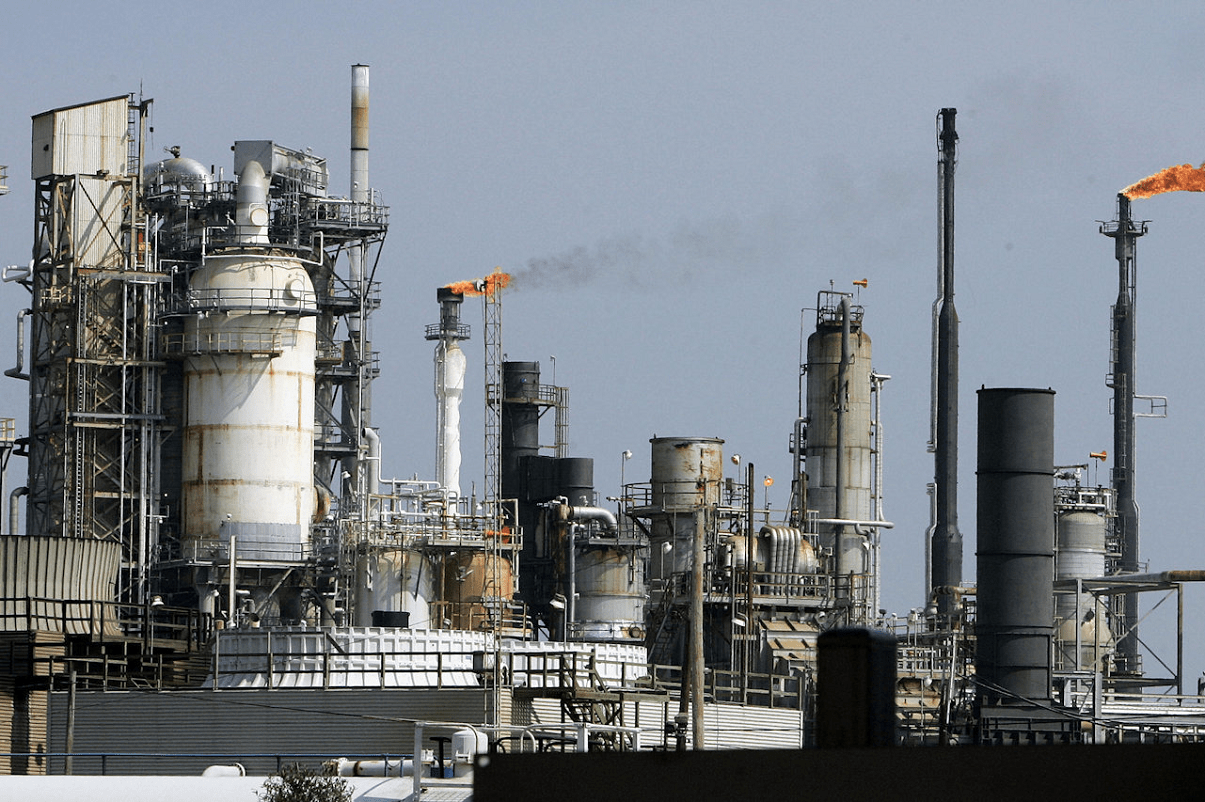
On July 20, 2018, the City of Baltimore filed a lawsuit in the Circuit Court for Baltimore City against twenty-six fossil fuel companies (collectively, the “defendants”).[1] The City contends that these energy companies should pay the costs associated with climate change in Baltimore.[2] The City alleged that the oil companies engaged in fraud, deception, denial, and disinformation, causing irreparable damage to Baltimore.[3]

II. The Jurisdictional Battle

Immediately after the filing of the complaint, two of the defendants moved for removal to federal court, commencing an aggressive jurisdictional battle between the parties.[4] The oil companies’ liability may hinge on whether a federal or state court hears the case. The defendants are fighting for a federal court since federal law treats common law nuisance more favorably than state law.[5] In American Electric Power v. Connecticut, the Supreme Court held the Clean Air Act, as well as Environmental Protection Agency action, authorized by the Clean Air Act displaces federal common law public nuisance claims against carbon-dioxide emitters.[6] This holding illustrates that the Clean Air Act provides a means to seek limits on companies’ emissions which would be the same relief the plaintiffs are seeking by invoking federal common law.[7] Precedent dictates that judges cannot set limits on greenhouse gas emissions in place of the Clean Air Act which permits the Environmental Protection Agency to set the same limits.[8] Therefore, if the City’s case is removed to federal court, then the case will likely be dismissed.[9] If the matter progresses in federal court and defendants lose, then the defendants could access the conservative-leaning United States Supreme Court, where they would face a favorable bench.[10] In contrast, the City assumes state court would prove a friendlier venue since Maryland elected judges would hear the matter.[11]

Continue reading “The Future of Climate Change Liability: A Jurisdictional Battle”

The Legality and Ethics of Court-Ordered Defendant Vaccination

*Samantha Laulis

I. Introduction

As the COVID-19 pandemic persists, concern regarding vaccination rates continues increasing.[1] The Delta variant has raised additional concerns about community spread and underscored the importance of vaccination.[2] As a result, many employers, universities, and private businesses now mandate vaccines for in-person return.[3] However, the vaccine mandates continue to generate considerable debate and litigation.[4]

Continuing the trend in vaccine mandates, a handful of judges have issued orders requiring criminal defendants to be vaccinated as a condition of their release.[5] Judges issuing such orders include Judge Jed Rakoff of the U.S. District Court for the Southern District of New York and two state judges in Ohio.[6] While these orders appear superficially similar to vaccine mandates for students or employees, these orders potentially elevate the goal of public safety at the expense of the rights of an already vulnerable group.[7]

Continue reading “The Legality and Ethics of Court-Ordered Defendant Vaccination”

Bracing for the Storm: Maryland’s Options for Braving a Wave of Evictions and Foreclosures

*Victoria Skinner

I. Introduction

In March 2020, COVID-19 became a household name in the United States.[1] Due to the contagious nature of the virus, state governments took unprecedented action, issuing stay-at-home orders and mandating remote learning.[2] The federal government offered relief in the form of stimulus payments, increased unemployment benefits, eviction moratoriums, and foreclosure moratoriums on federally backed mortgages.[3] States instituted their own foreclosure and eviction moratoriums to protect landlords and renters.[4] A recent study demonstrated that a higher percentage of Americans relied on government assistance in 2020 than at any other point over the last twenty years.[5]

Continue reading “Bracing for the Storm: Maryland’s Options for Braving a Wave of Evictions and Foreclosures”

Highest Case Note from Write-On 2021: State v. Sayles, 244 A.3d 1139 (Md. 2021)

*Jeffrey Neuman

The Court of Appeals of Maryland held that the circuit court did not abuse its discretion when it instructed jurors that jury nullification is a juror’s willful dismissal of evidence or refusal to apply the law and that the jurors are not authorized to engage in such a practice. State v. Sayles, 244 A.3d 1139 (Md. 2021).

I. Introduction

In State v. Sayles, the Court of Appeals of Maryland examined whether Maryland juries are permitted to engage in jury nullification.[1] The Court concluded that while juries may inevitably possess the power of nullification, Maryland juries are not authorized to engage in jury nullification.[2] In a case of first impression, the Court of Appeals reversed the Court of Special Appeals’ holding.[3] The intermediate appellate court held that the circuit court abused its discretion when, in response to several jury notes inquiring about jury nullification, it instructed jurors that jury nullification is a juror’s purposeful rejection of the evidence or refusal to apply the law and that jurors are prohibited from engaging in such a practice.[4] In doing so, the Court established a precedent that will hinder the use of jury nullification as a tool for promoting communal critiques of racial inequality within the Maryland criminal justice system.[5]

Continue reading “Highest Case Note from Write-On 2021: State v. Sayles, 244 A.3d 1139 (Md. 2021)”