Highest Case Note from Write-On 2023: Wadsworth v. Sharma, 278 A.3d 1269 (Md. 2022)

*Philip Glaser

The Supreme Court of Maryland rejected the loss of chance doctrine for claims of negligently hastened death by terminal illness. Wadsworth v. Sharma, 278 A.3d 1269 (Md. 2022).

I. Introduction

In Wadsworth v. Sharma, the Supreme Court of Maryland considered whether to adopt the loss of chance doctrine in wrongful death cases where the decedent’s survival odds were fifty percent or less.[1] The family of the terminally ill Ms. Wadsworth sued her oncologist for failure to act on a scan that revealed she had a fatal cancer. The family sought recovery that accounted for the two and a half years of estimated survival of which the doctor’s negligence deprived her.[2] Traditional causation principles require the plaintiff to prove “that the defendant proximately caused the decedent’s death,”[3] which, under the majority’s view, is impossible for a plaintiff who dies of a terminal illness.[4] Alternatively, the loss of chance doctrine permits a plaintiff to satisfy the lower standard of proof that the defendant’s negligence at least caused a loss of chance at a better outcome.[5] On appeal, the Supreme Court of Maryland interpreted the Wadsworth’s argument as a loss of chance claim but refused to recognize the doctrine because it was inconsistent with Maryland’s Wrongful Death Act and the case was insufficient to overcome stare decisis.[6] The court affirmed summary judgment in favor of the defendant for the plaintiff’s failure to prove that the defendant proximately caused the decedent’s death.[7] Justice Watts’s dissent, however, highlighted a slightly different application of traditional causation principles that would establish a remedy for those whose family members have died because of negligently hastened terminal illness, closing the gap in Maryland tort law which the Wadsworths fell into.[8]

II. Historical Development

A. Maryland’s Wrongful Death Act of 1852 Permitted Personal Actions on Behalf of Deceased Persons.

At common law, “a personal action died with the person,” preventing any action on behalf of a deceased person after death, including an action pertaining to that person’s wrongfully-caused death.[9] English Parliament passed the Fatal Accidents Act of 1846 to address this bind.[10] The Act expressly created liability for an actor who causes a person’s death, “notwithstanding the death,” and permitted the family of that deceased person to recover for the death.[11] Every state in the United States has adopted a similar statute[12] and, in 1852, Maryland passed its own Wrongful Death Act for the same purpose, with language very similar to the Fatal Accidents Act.[13] Since that time, the General Assembly has amended the Wrongful Death Act three times, each for the exclusive purpose of extending the time within which a wrongful death claim may be brought.[14]

B. The Supreme Court of Maryland Applies Traditional Causation Standards for Wrongful Death and Survival Claims.

The Wadsworth court refers to “traditional” and “well-settled” causation principles as its rule for assessing causation in wrongful death and survival actions,[15] clarifying that “the plaintiff bears the burden of proving by a preponderance of the evidence that the alleged wrongful act or omission proximately caused the decedent’s death.”[16] A plaintiff who cannot prove that the decedent had a greater than fifty percent chance of survival absent any negligence is, as a matter of law, unable to meet the burden necessary to prove proximate cause.[17] In contrast, the loss of chance doctrine “permits a claimant to recover where a physician’s breach of the standard of care . . . caused the loss of a statistical chance of survival or of a better outcome.”[18] Unlike traditional causation principles, the doctrine permits recovery in medical malpractice claims for decedents who had a fifty percent or less chance of survival absent any negligence.[19] Twenty-four jurisdictions have adopted the standard[20] in some form.[21] In a line of wrongful death and survival cases, the Supreme Court of Maryland consistently declined to adopt the loss of chance doctrine, finding instead that traditional causation principles resolve liability in a manner that does not justify upsetting precedent.[22]

In Weimer v. Hetrick, a wrongful death case decided in 1987, the court reviewed jury instructions which demanded the jury find in favor of the defendant doctor if it concluded that the decedent baby’s prematurity was less than fifty percent survivable absent any negligence.[23] The plaintiff argued that a case previously heard by the Supreme Court of Maryland, Thomas v. Corso, only required the plaintiff to prove that the baby had a “substantial possibility of survival [which] the defendant ha[d] destroyed,”[24] a standard borrowed from the Fourth Circuit case, Hicks v. United States.[25] The Weimer court dismissed the quote used in Thomas as dictum, asserting that “no new ground [has] been plowed by Hicks or Thomas,” and that causation in both cases was in fact established using traditional principles.[26] The court denied the plaintiff’s appeal of the jury instructions, holding that no alternative standard of causation was called for and that the jury correctly applied the traditional standard.[27] In his concurrence, Judge McAuliffe expressly noted that, for the very reason that traditional causation principles applied, the court did not arrive at any judgment on the loss of chance doctrine, which “must await resolution on another day.”[28]

C. The Supreme Court of Maryland Declined to Adopt the Loss of Chance Doctrine.

In 1990, the court took up the issue of loss of chance directly in Fennell v. Southern Maryland Hospital Center, Inc.[29] The plaintiffs, in full recognition that Maryland law did not offer a remedy for a wrongful death claim in the wake of Weimer, petitioned the Supreme Court of Maryland arguing that a remedy should be available for their survival claim via the loss of chance doctrine.[30] The court reviewed both rationales for using the loss of chance doctrine that have been adopted elsewhere: (1) as a means to relax the causation standard; and (2) as a means of assessing damages.[31]

First, the court rejected relaxing causation standards to allow a finding of full liability for anything less than fifty-one percent responsibility, reasoning that doing so would lower a bar intentionally set to filter out uncertain causation[32] and would violate legislative expectations.[33] In so holding, the court affirmed its decision in Weimer to disregard the concept of a “substantial possibility of survival”[34] as “at best dictum.”[35]

Second, the court rejected the use of loss of chance to calculate damages on policy grounds.[36] The court did acknowledge that “[a] good argument can be made that damages ought to be recoverable when, due to a doctor’s negligence, a patient loses a substantial, though less than probable, chance of survival.”[37] But the court reasoned that a remedy for loss of chance of survival itself should, in principle, permit even those who survive to recover damages—an outcome which it rejected as inconsistent with Maryland law.[38] The court also argued that application of disputed probabilities would be impractical at trial.[39] Further, adopting the loss of chance doctrine would result in increased malpractice litigation and cause a significant economic impact—two consequences that bar judicial enactment.[40] By declining to adopt the doctrine, the court maintained the gap in tort law that precludes a remedy for persons who die of negligently hastened terminal illness.

III. Instant Case

Stephanie Wadsworth received a breast cancer diagnosis in 2006 and, following treatment, doctors declared her in remission in 2008.[41] In 2013, Ms. Wadsworth’s oncologist, Dr. Poornima Sharma, conducted a breast cancer screening that revealed a new and potentially cancerous lesion on Ms. Wadsworth’s clavicle.[42] Dr. Sharma and a radiologist did not believe the abnormal lesion was cancerous,[43] so Dr. Sharma did not inform Ms. Wadsworth of the abnormal lesion or conduct further testing.[44] In March 2016, Ms. Wadsworth injured her shoulder and went to the hospital, where she received a bone scan that incidentally revealed the abnormal lesion on her clavicle as metastasized cancer consistent with an origin of breast cancer.[45]

Ms. Wadsworth died from cancer in June 2017 and her family subsequently filed wrongful death and survival actions against Dr. Sharma and others.[46] Depositions of other doctors established that Ms. Wadsworth’s cause of death was metastatic breast cancer and that the condition is nearly always fatal, though the average person can expect to live eighty months from the date of an abnormal scan of the kind that Dr. Sharma disregarded.[47] Ms. Wadsworth’s death occurred two and a half years short of this expectation.[48] The trial court interpreted the pleadings as loss of chance claims and granted summary judgment to the defendants on the grounds that Maryland recognizes no such cause of action.[49] The trial court noted that, under traditional causation principles for a wrongful death claim, the facts indicated Ms. Wadsworth’s cancer as the proximate cause of her death, so Dr. Sharma could not be found liable as a matter of law.[50] The Appellate Court of Maryland confirmed the trial court’s judgment, holding that it was impossible for the Wadsworths to meet their burden under traditional causation.[51] The Supreme Court of Maryland granted a writ of certiorari to answer whether a wrongful death claim may be made against a “health care provider [who] shortened the terminally ill decedent’s life.”[52]

The majority rejected the possibility of such a claim, citing both the legislative intent of the Wrongful Death Act and its prior judicial application, as well as a lack of practical urgency sufficient to overcome the barrier of stare decisis.[53] First, the court deemed that the plain language of the Wrongful Death Act unambiguously demanded traditional causation principles[54] and that the legislature’s silence was acquiescence to the court’s interpretation of the law.[55] Second, an examination of the case law, chiefly Weimer and Fennell, revealed no factual distinction that could save the Wadsworths’ claim from the same preclusive analysis applied in those two controlling cases on wrongful death and survival claims.[56] Each dealt with patients whose chances for survival fell below fifty percent, rendering a wrongful death claim against a negligent health care provider deficient as a matter of law for lack of causation under traditional principles.[57] The court also echoed the Fennell court’s practical considerations as reasons not to adopt loss of chance.[58] Finally, the court concluded that implementing the loss of chance doctrine would violate stare decisis because the present reliance on traditional causation principles is not “clearly wrong and contrary to established principles” nor has it been “superseded by significant changes in the law or facts.”[59] The court agreed with its conclusion in Fennell[60] to defer policy concerns to the legislature; if the loss of chance doctrine is to take effect in Maryland, it should be enacted legislatively rather than judicially.[61]

In her dissent, Justice Watts agreed with the majority that there is no need to resort to the loss of chance doctrine for the Wadsworths’ claim, but asserted a distinction between this case and the majority’s controlling cases revealed by a novel interpretation of traditional causation principles: assessing a decedent’s odds of survival at their time of death, rather than at the onset of the fatal condition.[62] Given Ms. Wadsworth’s estimated survival for a further two and a half years after her actual death, her chance of survival absent negligence at the time of her death was likely over fifty percent, which Justice Watts argued would make her eligible for recovery under traditional causation principles.[63] The same could not be said for the decedents in Weimer and Fennell, neither of whom had a chance of survival absent negligence greater than fifty percent at their respective times of death and both of whom died soon after their terminal conditions manifested.[64] Justice Watts argued that the distinction between death by an incurable terminal illness and death by other causes “is an arbitrary line to draw and an inappropriate application of Maryland case law.”[65] She further questioned “how long would be long enough for long-term survival” for the majority to reject the conclusion that the decedent had no chance of survival.[66] Justice Watts asserted that the majority misplaced its reliance on the legislature’s silence as acquiescence to the court’s interpretation of the Wrongful Death Act.[67] The dissent concluded that the majority’s interpretation of traditional causation principles likely precludes the terminally ill from making claims of negligent treatment[68] and that the substantial incidence and increasing survivability of such illnesses calls for a remedy for such claims.[69] The majority made no response to Justice Watts’s dissent.[70]

IV.  Analysis

A. Though the Merits of Loss of Chance Are Disputed, the Majority Has Not Built a Strong Theoretical Case Against It.

The criticisms of the loss of chance doctrine from Fennell, endorsed by the Wadsworth court,[71] included that loss of chance would allow those who survive their illnesses to recover on “mere possibilities,” which Maryland law does not allow.[72] However, as indicated by the Wadsworth majority’s chosen authority on the loss of chance doctrine,[73] “[t]he law has moved from harm based to risk based” tort liability in U.S. jurisdictions.[74] In matters where forty-nine percent survival is a bar to recovery, while fifty-one percent is grounds for full recovery, the line that traditional causation principles straddle is the width of a “mere possibility.”[75] Accounting for these differences through a new doctrine like loss of chance permits legal distinctions between negligence that shortens a terminally ill person’s expectation of survival by years versus by days.

The Fennell court also criticized the loss of chance doctrine’s reliance on potentially “unreliable, misleading, easily manipulated, and confusing” probabilities and statistical evidence.[76] Notwithstanding the Fennell court’s own statement that “[t]raditional tort law is based on probabilities,”[77] it is difficult to otherwise imagine what class of information would better account for the complex synthesis of risks, liabilities, and credibilities that ultimately must be reduced to a dollar amount than numbers in the form of statistical evidence. Indeed, in 2000, the Supreme Court of South Dakota specifically found justification for adopting the loss of chance doctrine in medical malpractice cases in “‘the availability of statistical probabilities in the field of medical science’ not available elsewhere.”[78] If the Wadsworth court fears “confusing factfinders”[79] with numbers, then the court takes issue with the foundations of tort law.

Most critically, the Fennell and Wadsworth courts agreed that that no change of legal or factual circumstances permitted them to adopt loss of chance as an exception to stare decisis.[80] Though Justice Watts’s dissent argued against this conclusion in favor of adopting a different interpretation of traditional causation principles,[81] she discussed the legal and factual realities in a manner supportive of any doctrine that would permit recovery for terminally ill people whose lives are negligently cut short,[82] including loss of chance. As to the legal considerations, Justice Watts noted that, in the past, where the Court has found “an injury for which there exists no remedy, . . . the Court has acted to fill the gap.”[83] Though Justice Watts accused the Majority of not ignoring the gap, but in fact creating it through this decision,[84] her appeal to this gap in the law nevertheless stands to support a break with legal precedent, such as challengers may urge in cases to come. As to the factual circumstances, Justice Watts also emphasized the dramatic prevalence of cancer[85] and how technology has improved its survivability.[86] With increasing cancer life expectancies, one can infer that, in the future, Maryland will likely see more damaging and potentially more numerous occurrences of medical negligence that hasten death by cancer. Though Justice Watts viewed the loss of chance doctrine as unnecessary to fill the widening remedy gap she foresaw,[87] she nevertheless made a forceful showing of the concerning legal and factual realities[88] that other jurisdictions have addressed by breaking with stare decisis.[89]

B. The Dissent Offers a Happy Medium Causation Standard to Cover the Terminally Ill.

Justice Watts’s dissenting assertion, that survival expectations should be measured at the time of death, would close the gap in recovery for the terminally ill that the majority permits to remain open.[90] This interpretation does not alter other characteristics of traditional causation principles,[91] so it should be straightforward for courts to apply. With the amount of contention that the loss of chance doctrine has generated between judiciaries and legislatures in other states,[92] the simple modification of traditional causation principles to measure survival expectations at the time of death instead of at the onset of the terminal condition seems a viable way forward for Maryland.

V. Conclusion

Wadsworth’s holding makes no change to Maryland’s treatment of wrongful death claims; there remains no remedy for victims of medical malpractice who die from negligently hastened terminal illness.[93] Though the majority considers the loss of chance doctrine too great of a theoretical departure from traditional causation to be a viable solution,[94] Justice Watts’s dissent shows that an intuitive and minimally divergent doctrinal interpretation can affect an equitable outcome in Wadsworth.[95] For this reason, it is unclear why the majority offered no commentary or words to assert its orthodox approach as superior. From the majority’s silence, one can infer that no good rebuttal exists, and that Justice Watts’s approach will have its day when the political winds are right.

*Philip Glaser is a second-year student at the University of Baltimore School of Law and a staff editor for Law Review.  He came to law school after a decade-long career in education.  In the summer of 2023, Philip worked as a judicial intern for Hon. Brendan A. Hurson at the U.S. District Court for the District of Maryland.  In the fall, he is serving as a Law Scholar for Professor Dolin’s Torts class.  Philip intends to practice at the intersection of criminal defense and civil rights. 


[1] Wadsworth v. Sharma, 278 A.3d 1269, 1275 (Md. 2022).

[2] Id. at 1273–75.

[3] Id. at 1272.

[4] Id. at 1291 (Watts, J., dissenting) (“[T]he Majority has applied case law in a manner that . . . prevent[s] families with terminally ill relatives from recovering in wrongful death actions.”).

[5] Id. at 1273 (majority opinion).

[6] Id. at 1285.

[7] Id.

[8] Id. at 1293 (Watts, J., dissenting).

[9] Id. at 1276 (majority opinion) (citing Parker v. Hamilton, 160 A.3d 615, 619 (Md. 2017)).

[10] Id.

[11] Id. at 1276–77 (quoting Fatal Accidents Act 1846, 9 & 10 Vict. c. 93 (Eng.)).

[12] Id. at 1277 (citing Parker, 160 A.3d at 619).

[13] Id. (citing Mummert v. Alizadeh, 77 A.3d 1049, 1053 (Md. 2013)); Md. Code Ann., Cts. & Jud. Proc. §§ 3-901 to 3-904 (West 2023).

[14] Wadsworth, 278 A.3d at 1277 (noting the latest amendment in 1971, which extended the window to bring a wrongful death claim to three years).

[15] Id. at 1272–73, 1278, 1282, 1284; Weimer v. Hetrick, 525 A.2d 643, 653 (Md. 1987) (McAuliffe, J., concurring); Fennell v. S. Md. Hosp. Ctr., Inc., 580 A.2d 206, 210–12 (Md. 1990).

[16] Wadsworth, 278 A.3d at 1278.

[17] Id. at 1284–85.

[18] Id. at 1280 (quoting Tory A. Weigand, Lost Chances, Felt Necessities, and the Tale of Two Cities, 43 Suffolk U. L. Rev. 327, 349 (2010)).

[19] Id. at 1288 (Watts, J., dissenting).

[20] Id. at 1293 n.2.

[21] Fennell v. S. Md. Hosp. Ctr., Inc., 580 A.2d 206, 210 (quoting Cooper v. Hartman, 533 A.2d 1294, 1297 (Md. 1987) (clarifying that “[s]ome have simply relaxed the standards regarding causation and allowed full compensation for an injury or death where the plaintiff demonstrated less than a 50% chance of recovery. Others have left the traditional rules of causation intact but have viewed the loss of a chance as a way of approaching damages.”).

[22] Id. at 215 (“Consequently, we are not persuaded that the benefits of allowing loss of chance damages in a survival action offset the detriments of a probable increase in medical malpractice litigation and malpractice insurance costs.”); Wadsworth, 278 A.3d at 1284 (invoking stare decisis to maintain traditional causation rules which are not “clearly wrong and contrary to established principles” (quoting Wallace v. State, 158 A.3d 521, 535 (Md. 2017))).

[23] Weimer v. Hetrick, 525 A.2d 643, 646–47 (Md. 1987).

[24] Id. at 647 (quoting Thomas v. Corso, 288 A.2d 379, 390 (Md. 1972)).

[25] Hicks v. United States, 368 F.2d 626, 632 (4th Cir. 1966).

[26] Weimer, 525 A.2d at 652.

[27] Id.

[28] Id. at 653 (McAuliffe, J., concurring).

[29] Fennell v. S. Md. Hosp. Ctr., Inc., 580 A.2d 206, 215 (Md. 1987).

[30] Id.

[31] Id. at 210.

[32] Id. at 211.

[33] Id. at 211–12 (referring to the likely legislative intent behind a statute establishing a medical malpractice cause of action, which requires that “the departure from standards of care is the proximate cause of the alleged injury” (emphasis omitted) (quoting Md. Code Ann., Cts. & Jud. Proc. § 3-2A-04(b)(1)(i) (West 2023))).

[34] See discussion supra Section II.B.

[35] Fennell, 580 A.2d at 211.

[36] Id. at 215.

[37] Id. at 212.

[38] Id. at 213 (“Maryland law clearly does not allow damages based on mere possibilities.”).

[39] Id. at 213–14.

[40] Id. at 214–15 (“Recognizing loss of chance damages in a survival action would involve serious public policy concerns. We are not convinced that such a change should be initiated by this Court.”).

[41] Wadsworth v. Sharma, 278 A.3d 1269, 1273 (Md. 2022).

[42] Id.

[43] Id. at 1273 n.2.

[44] Id. at 1273.

[45] Id. at 1273–74.

[46] Id. at 1274.

[47] Id.; Wadsworth v. Sharma, 254 A.3d 66, 70 & n.4 (Md. Ct. Spec. App. 2021), aff’d, 278 A.3d 1269 (Md. 2022).

[48] Wadsworth, 278 A.3d at 1275.

[49] Id. at 1274.

[50] Id.

[51] Wadsworth, 254 A.3d at 80 (“The evidence presented to the motions court proved that at the time of the alleged negligence, the decedent didn’t have an over 50% chance of a cure. . . . The motions judge had no choice but to grant summary judgment in favor of the defendants-appellees as to the wrongful death claim.”).

[52] Wadsworth, 278 A.3d at 1275.

[53] Id. at 1285.

[54] Id. at 1278 (finding the grant by Md. Code Ann., Cts. & Jud. Proc. § 3-902(a) of an action “against a person whose wrongful act causes the death of another,” to require traditional causation by its plain language).

[55] Id. at 1279 (noting that the only amendments to the Wrongful Death Act have been to extend the window for claims thereunder).

[56] Id. at 1280–83.

[57] Id. at 1282–83.

[58] Id. at 1283 (“Further, we noted practical difficulties with recognizing the loss of chance doctrine, including the risk of confusing factfinders.”).

[59] Id. at 1284 (quoting Wallace v. State, 158 A.3d 521, 535 (Md. 2017)).

[60] See supra notes 29–40 and accompanying text.

[61] Wadsworth, 278 A.3d at 1279, 1284.

[62] Id. at 1286 (Watts, J., dissenting).

[63] Id.

[64] Id. at 1287–88.

[65] Id. at 1290 (analogizing Wadsworth with Marcantonio v. Moen, 959 A.2d 764, 775–76 (Md. 2008), in which the Supreme Court of Maryland reversed summary judgment against a plaintiff whose decedent likely would not have died from endometrial cancer had the doctor not been negligent in failing to diagnose).

[66] Id. at 1291.

[67] Id. at 1292 (“[T]his Court has never interpreted the Wrongful Death Act in the manner in which the Majority does now to preclude its application to a person who has a greater than fifty percent chance of survival at the time of death. In other words, the General Assembly could not have been aware of, let alone have acquiesced to, the Majority’s present interpretation of the Act.”).

[68] Id. at 1293.

[69] Id. (noting that forty percent of Marylanders will be diagnosed with cancer at some point in their lives).

[70] See id. at 1285 (majority opinion).

[71] See discussion supra Section II.C.

[72] Fennell v. S. Md. Hosp. Ctr., Inc., 580 A.2d 206, 213 (Md. 1990).

[73] See supra note 18.

[74] Tory A. Weigand, Lost Chances, Felt Necessities, and the Tale of Two Cities, 43 Suffolk U. L. Rev. 327, 392 (2010). “As it presently stands, approximately eighteen states have recognized the doctrine in some form, while approximately thirteen states have rejected it.” Id. at 351.

[75] Fennell, 580 A.2d at 213 (“Maryland law clearly does not allow damages based on mere possibilities.” (citingPennwalt Corp. v. Nasios, 550 A.2d 1155, 1161 (1988))).

[76] Id.

[77] Id. at 214.

[78] Weigand, supra note 74, at 359–60 (quoting Jorgenson v. Vener, 616 N.W.2d 366, 371 (S.D. 2000)).

[79] Wadsworth v. Sharma, 278 A.3d 1269, 1283 (Md. 2022).

[80] Id. at 1284; Fennell, 580 A.2d at 214–15.

[81] Wadsworth, 278 A.3d at 1291 (Watts, J., dissenting).

[82] Id. at 1291, 1293.

[83] Id. at 1291.

[84] Id.

[85] Id. at 1293 (“[F]orty percent of men and women will be diagnosed with cancer at some point in their lives[.]”).

[86] Id. at 1291 (“Because of this standard of care and advances in technology, cancer mortality rates continue to decline for adults.” (citing U.S. Dep’t of Health & Hum. Servs. Nat’l Cancer Inst., Annual Report to the Nation 2021: Overall Cancer Statistics (2021), https://seer.cancer.gov/report_to_nation/statistics.html [https://perma.cc/AGW7-FCGM])).

[87] Id. at 1289. (“Put simply, this is not a loss of chance case.”).

[88] Id. at 1291, 1293.

[89] See Weigand, supra note 74.

[90] Wadsworth, 278 A.3d at 1286, 1293 (Watts, J., dissenting).

[91] See id. at 1286, 1293.

[92] See Weigand, supra note 74, at 354–64 (noting that all state legislation pertaining to loss of chance has been exclusively in response to judicial adoption of the doctrine, including in Michigan, New Hampshire, West Virginia, South Dakota, Montana, and Massachusetts).

[93] See discussion supra Part III.

[94] See discussion supra Section IV.A.

[95] See discussion supra Section IV.B.

The Not So Fair Housing Act: Disparities in Home Valuations

*Iyana Arrington

I. Introduction

During the summer of 2021, Baltimore natives Nathan Connolly (Nathan) and his wife, Shani Mott (Shani), pursued a home mortgage refinance.[1] After purchasing their home, the couple made numerous renovations.[2] However, the appraiser valued their home at only $472,000.[3] Months later, the couple applied again; but this time a colleague stood in as the homeowner.[4] The colleague acquired a value of $750,000—nearly sixty percent higher than their previous appraisal.[5] The home was identical for both applications; the only difference was that Nathan and Shani are African-American, and their colleague is white.[6] This is only one case among dozens in which homeowners of color experienced discrimination in their home valuations.[7]

For many years prior to 1968, the government used racial classifications to explicitly segregate housing.[8] Federal legislation perpetuated systemic racism by spearheading discriminatory housing policies.[9] To correct this issue, Congress introduced the Fair Housing Act of 1968 to strike down prior legislation that resulted in unequal treatment under the law.[10] While the law remains facially neutral today, remnants of de facto discrimination[11] in the housing market continue to impact minority communities.[12]

II. History

Racially-biased federal policies have played a critical role in the creation and endurance of segregated housing assessments.[13] In the 1930’s, the Federal Housing Administration (Administration)[14] refused to provide mortgage loans on homes located where the Administration presumed the loan might create an “inharmonious racial group” within a neighborhood, further propelling the problematic principal that race mixing was inappropriate and devaluing homes in African-American neighborhoods and artificially inflating housing values in White neighborhoods.[15] Subsequently, lenders began instituting practices, like “redlining,” to ensure segregated standards for homeownership.[16] Under these circumstances, home appraisals[17] became instrumental to the federal government’s scheme for the housing market, resulting in home values being heavily impacted by race.[18]

The Fair Housing Act of 1968 was introduced to address discrimination issues in the housing market and reverse prior intentional practices.[19] This legislation prohibited housing discrimination in transactions, while simultaneously requiring the federal government to administer housing programs in a manner that would affirmatively undo the vestiges of historic segregation.[20] However, in the midst of the political climate at the time,[21] the statute was rushed into implementation and legislators neglected to include particular methods for enforcement.[22] As the years progressed without any initial enforcement power, the government’s attempt to use the Fair Housing Act as an adequate remedy for housing market discrimination failed.[23]

III. Implications

While the progression of remedies under the Fair Housing Act displays the federal government’s attempt to eliminate de facto segregation in housing practices, some issues remain unaddressed and continue to affect minority communities.[24] According to the 2020 census, White Americans account for approximately sixty-two percent of the nation’s racial makeup, while African-Americans are represented at nearly fifteen percent.[25] Even with this drastic difference, studies show that today, the average African-American resides in a neighborhood that is only thirty-five percent white.[26] Because real estate in predominantly minority areas has consistently been undervalued, many others are unwilling to purchase in these zones.[27] These practices, although unintentional, significantly contribute to the racial wealth gap by suppressing the value not only of homes but of whole communities.[28]

These programs have impacted many major cities.[29] For instance, homes in predominately Black neighborhoods in Baltimore are chronically valued at about fifty percent less than the homes of their non-minority counterparts.[30] The primary issue with the disparity in valuations is that it hampers the ability of minorities to build equity in their homes.[31] Minority neighborhoods have experienced unrecoverable depreciation in home values.[32] Studies conducted after the 2009 recession indicate that Black homeowners continuously accrued less equity and were more likely to end the period with negative equity.[33] As another recession looms,[34] the central question is whether minority homeowners can sustain another drastic decrease in their property values.   

States across the country have begun to act to combat this issue.[35] In 2020, New Jersey introduced a bill that outlines legislative action for fining, suspending or revoking the licenses of appraisers who knowingly engage in discriminatory practices in valuing homes.[36] It also requires appraisers to inform sellers of the complaint process.[37] Many other states have also begun to take similar approaches to this proposed legislation.[38] But, most notably, President Biden has increased efforts on the federal level to supplant racial biases in housing practices.[39] In March of 2022, President Biden established the Interagency Task Force on Property Appraisal and Valuation Equity (PAVE) and gave them the responsibility of “clos[ing] the racial wealth gap by addressing mis-valuations for families and communities of color.”[40] PAVE’s action plan discusses how valuation bias developed alongside the scheme of the Fair Housing Act and outlines specific commitments for correcting this history, including: professional standards for appraisers; a valuation “appeals” process for victims of discrimination; requiring anti-bias training for all appraisers; and funding opportunities that educate homeowners of color on appraisals.[41] While PAVE’s plan is comprehensive and addresses many of these issues, until the federal government implements these procedures for dismantling discrimination in valuations, there is no clear solution to stop this subjective appraisal process.

IV. Conclusion

Black neighborhoods are estimated to have lost approximately $156 billion cumulatively due to discriminatory housing valuations.[42] Although instituted as a tool to protect minorities, the Fair Housing Act has not addressed the influence of systemic racism and unconscious bias on the housing market.[43] As more states begin to adopt legislation specifically geared toward housing appraisals, the federal government should take the initiative to formulate concrete rules and procedures for ensuring these discriminatory practices do not continue to irreparably harm minority communities.

*Iyana Arrington is a second-year day student at the University of Baltimore School of Law. She serves as a Staff Editor for the Law Review, a Legal Writing Fellow in the Legal Writing Center, and a Teaching Assistant and Law Scholar for Contracts I and II. She is also a member of the Fannie Angelos Program for Academic Excellence at the University, as well as a Distinguished Scholar of the Royal Graham Shannonhouse III Honor Society. In May, she plans to join the Baltimore office of Baker Donelson as a 2023 Summer Associate.


[1] Debra Kamin, Home Appraised with a Black Owner: $472,000. With a White Owner: $750,000.,N.Y. Times (Aug. 18, 2022), https://www.nytimes.com/2022/08/18/realestate/housing-discrimination-maryland.html.

[2] Id.

[3] Id. This value was only about $20,000 more than their original purchase price in 2017. Id.

[4] Id.

[5] Id.

[6] Id.

[7] See Troy McMullen, For Black Homeowners, a Common Conundrum with Appraisals, Wash. Post (Jan. 21, 2021), https://www.washingtonpost.com/realestate/for-black-homeowners-a-common-conundrum-with-appraisals/2021/01/20/80fbfb50-543c-11eb-a817-e5e7f8a406d6_story.html.

[8] See Michelle Adams, The Unfulfilled Promise of the Fair Housing Act, New Yorker (April 11, 2018), https://www.newyorker.com/news/news-desk/the-unfulfilled-promise-of-the-fair-housing-act.

[9] See discussion infra Part II.

[10] Kamin, supra note 1.

[11] “De facto” segregation occurs when the government does not purposely discriminate; but rather, an unintentional government action causes a “racial imbalance.” Elise C. Boddie, The Muddled Distinction Between De Jure and De Facto Segregation 1 (Kristine L. Bowman ed.) (2020), https://theinclusionproject.rutgers.edu/wp-content/uploads/2020/07/the-muddled-distinction-between-de-jure-vs.-de-facto-segregation.pdf.

[12] See discussion infra Part III.  

[13] Michelle Zonta, Racial Disparities in Home Appreciation, Ctr. Am. Progress (July 15, 2019), https://www.americanprogress.org/article/racial-disparities-home-appreciation/.

[14] In response to the Great Depression, in an attempt to stabilize the housing market, the federal government established the Federal Housing Authority to provide publicly backed loans to boost the demand for housing at the time. Id.

[15] Amanda Tillotson, Race, Risk, and Real Estate: The Federal Housing Administration and Black Homeownership in the Post World War II Home Ownership State, 8 DePaul J. Soc. Just. 25, 36 (2016).

[16] Redlining refers to the government’s parameters for appraising properties, which included color-coded maps ranking the “loan worthiness” of different communities. Candace Jackson, What is Redlining?, N.Y. Times (Aug. 17, 2021),  https://www.nytimes.com/2021/08/17/realestate/what-is-redlining.html.

[17] An appraisal is a critical element of the homebuying and lending processes that establishes the value of the property. U.S. Dep’t. Hous. & Urb. Dev., Property Appraisal & Valuation Equity Action Plan 2 (2022).

[18] Matthew Blake & Georgia Kromrei, Home Appraisals Ugly History and the Uncertain Future, Housingwire (June 14, 2021), https://www.housingwire.com/articles/home-appraisals-ugly-history-and-uncertain-future/.

[19] See generally Sam Fulwood, The U.S. History of Segregated Housing Continues to Limit Affordable Housing, Ctr. for Am. Progress (Dec. 15, 2016), https://www.americanprogress.org/article/the-united-states-history-of-segregated-housing-continues-to-limit-affordable-housing/.

[20] Id.

[21] The original Fair Housing Act was instituted at a time where the nation was experiencing “significant turmoil” in a wave of race-related unrest. Id. Although the legislation was highly contested, the assassination of Dr. Martin Luther King propelled the enactment of the statute. Id.

[22] Id. (describing the development of HUD rules on how to better apply FHA to modern issues the court may encounter); see also Kamin, supra note, 1.

[23] Zonta, supra note 13.

[24] See 42 U.S.C. §3601 et seq.; Adams, supra note 8; Fulwood, supra note 19.

[25] Nicholas Jones, et al., 2020 Census Illuminates Racial and Ethnic Composition of the Country, U.S. Census Bureau (Aug. 12, 2021), https://www.census.gov/library/stories/2021/08/improved-race-ethnicity-measures-reveal-united-states-population-much-more-multiracial.html

[26] Zonta, supra note 13.  

[27] See Fulwood, supra note 19.

[28] See generally Zonta, supra note 13.

[29] Rashawn Ray, et. al., Homeownership, Racial Segregation, and Policy Solutions to Racial Wealth Equity, Brookings (Sept. 1, 2021), https://www.brookings.edu/essay/homeownership-racial-segregation-and-policies-for-racial-wealth-equity/.

[30] Id.

[31] Zonta, supra note 13.

[32] Id.

[33] Id.

[34] See Sarah O’Brien, We’re in a “Housing Recession,” Experts Say. Here’s What That Means for Homeowners, Sellers, and Buyers, CNBC (Aug. 23, 2022, 3:57pm), https://www.cnbc.com/2022/08/23/what-a-housing-recession-means-for-homeowners-buyers-sellers.html.

[35] See, e.g., N.J. Leg. No. 5185, 2020–2021 Gen. Assemb., 219th Sess. (2020); H.B. 5862, 101st Gen. Assemb. (Ill. 2020).

[36] N.J. Leg. No. 5185, 2020–2021 Gen. Assemb., 219th Sess. (2020).

[37] Id.

[38] See H.B. 5862, 101st Gen. Assemb. (Ill. 2020); see also Earl Hopkins, Franklin County Auditor Michael Stinziano Looks at Racial Inequalities in Housing Appraisal Process, Columbus Dispatch (Sept. 24, 2020), https://www.dispatch.com/story/news/politics/government/2020/09/24/franklin-county-auditor-looks-housing-discrimination/3509051001/ (describing how a county in Ohio plans to eliminate inequalities through a fair housing appraisal commission who will review valuations).  

[39] See generally U.S. Dep’t Hous. & Urb. Dev., Property Appraisal & Valuation Equity Action Plan 1–45 (2022).

[40] Id.

[41] Id. at 22–37.

[42] Johnathon Rothwell & Andre M. Perry, Biased Appraisals and the Devaluation of Housing in Black Neighborhoods, Brookings (Nov. 17, 2021), https://www.brookings.edu/research/biased-appraisals-and-the-devaluation-of-housing-in-black-neighborhoods/.

[43] See Adams, supra note 8.  

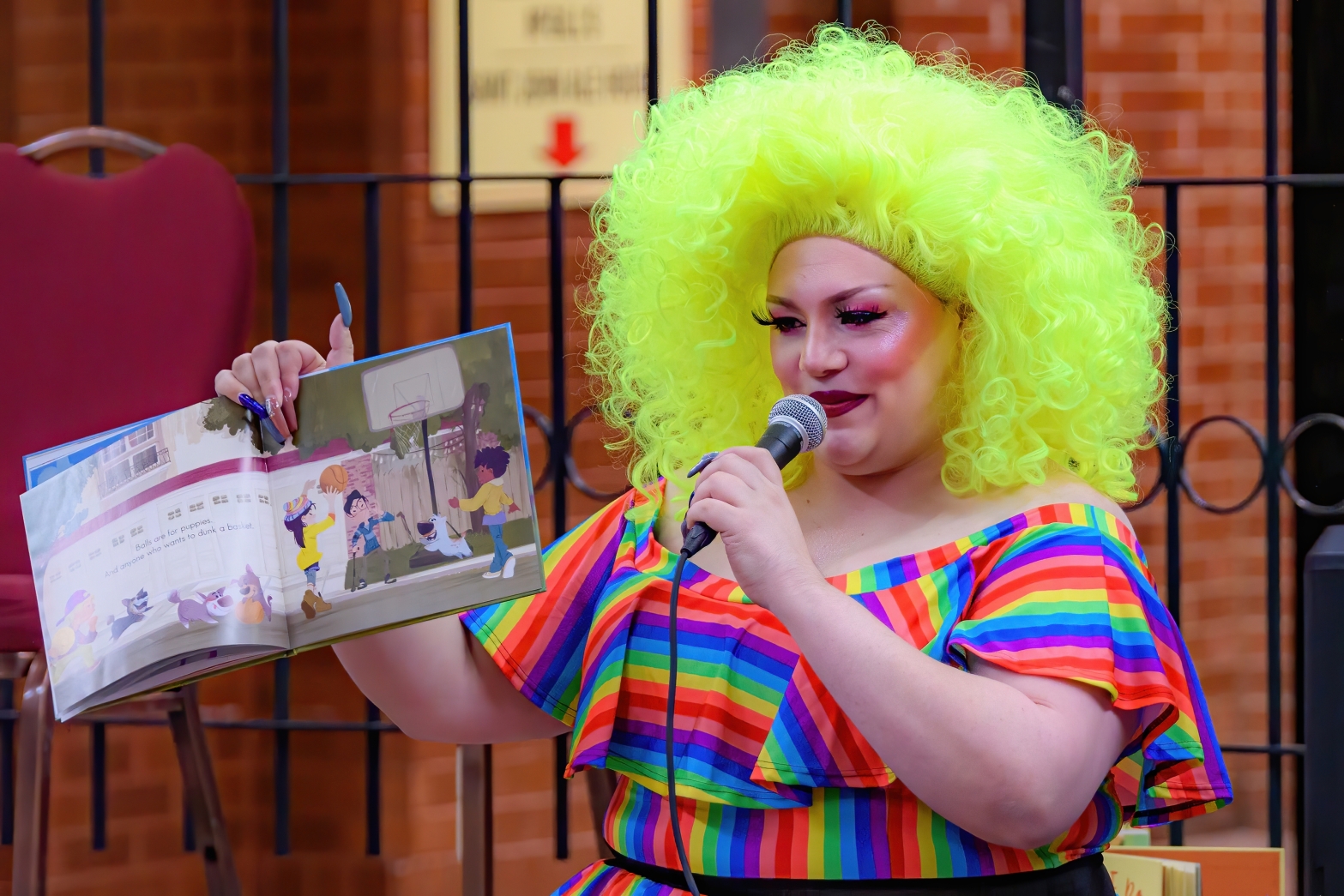
Take Their Crowns: Conservatives’ Subtly Sinister[1] Criminalization of Drag and Gender Expression


*Ashli Glatfelter

I. Introduction

As far as the queer community has come in nearly fifty-four years,[2] is it possible lawmakers will ban a staple of queer culture?[3] In recent years, more conservative states have introduced a torrent of bills targeting the LGBTQIA+ (LGBT) community and gender expression from multiple angles.[4] Beginning in 2022, some states introduced legislation restricting drag entertainment and performances[5] and placing aggressive limitations on the rights of transgender people.[6] One such bill, coined the “anti-drag bill,”[7] passed in Tennessee as recently as March 2023, and it has the LGBT community preaching: “Not today, Satan, not today!”[8]

Legislative discrimination against the LGBT community is nothing new.[9] In 1863, the first law against non-binary gender expression “prohibited someone from being out in public if they were wearing clothing that was different from their [legal] or assigned sex.”[10] Though laws sharing that bigoted sentiment have since been repealed,[11] the haunting new wave of anti-drag legislation, including the Tennessee law, leaves many questions about the extent of their enforcement and the potential for First Amendment challenges.[12]

II. Tennessee’s Anti-Drag Bill

The new Tennessee law effectively criminalizes drag by prescribing that “cabaret performers” shall “face misdemeanor charges in the first instance, punishable by a fine up to $2,500 and/or up to a year in jail”[13] for performing “on public property” or “in a location where [their performance] could be viewed by” minors.[14] Further, any “subsequent violations face a felony charge, punishable by up to six years in jail.”[15] Conservative legislatures have left the definition of “cabaret performers” intentionally broad, but these bills’ proponents[16] propose a certain definition that places drag performers squarely in the category of those who can be charged.

Generally, drag is the hyper-presentation of gender expression for entertainment purposes.[17] Many drag performers have drag personas that express the opposite of their assigned sex and gender identity, while other drag performers hyperbolically express their own gender identity.[18] Proponents of these anti-drag bills acknowledge this basic principle that drag performers exhibit different gender expressions because they included “male or female impersonators” within the definition of “cabaret performers.”[19] Conservative legislators contend that there is no entertainment value in drag performances. Rather, they assert that drag shows, by their gender-expressive nature, pose dangers to children.[20]

To curb the supposed dangers, the bills limit drag shows and performances in a number of ways.[21] They restrict where shows can be held and require the shows and potentially hosting businesses—like restaurants, bars, and nightclubs—to be “recategorized as sexually oriented enterprises,” requiring them to obtain specific permits, pay fees to remain open, and even lose state funding.[22] It remains untold just how far the restrictions on drag shows will reach. Will it prohibit drag performers from participating in cities’ Pride events?[23] Will it restrict schools or public libraries from hosting drag story times?[24] Will all bars have to black out their windows and stand guard at all doors to ensure no child can see in?[25]

The breadth of the proposed laws makes it conceivable that even non-drag performances by “male or female impersonators” could be subject to misdemeanor or felony charges.[26] When the definition of drag is limited to an expression of gender, while forgetting the “campy”[27] aesthetic, it brings traditional stage performances within reach of prosecution.[28] Such “broadness leaves theater shows or even female comedians dressed in pants at risk of violating these laws.”[29] Who is to say that young boys and girls who play the opposite gender to fulfill roles in school productions are not subject to criminal prosecution?[30]

As with any new law, there is a question of how the law will be enforced. In the near future, law enforcement could charge drag performers under the Tennessee law for dressing in drag on public streets or performing in places accessible to children—such as restaurants and libraries.[31] Unfortunately, for certain drag queens and kings, they may soon need to travel with more than their wigs, makeup, and outfits—an understanding of their legal rights may be more invaluable than new pumps or fresh tights.

III. Challenging Tennessee’s Anti-Drag Law

What follows is a brief analysis of the Tennessee law’s constitutionality concerning drag performers’ First Amendment freedoms of free speech and expressive conduct.[32] Individuals’ speech and expressive conduct cannot be restricted simply because the government or its agents do not like the messages therefrom or find them offensive.[33] While “[i]t has not yet been determined by a court that performances by female or male impersonators are expressive conduct protected under the First Amendment, [] scholars say they most likely are” because drag performances “consist of music, dance and theater, all of which have long been considered expression” protected by the First Amendment.[34]

In light of drag performers’ expressive conduct arguments, proponents of the Tennessee law would likely argue that drag performances are inherently obscene and, thus, not subject to First Amendment protection.[35] In 1973, the Supreme Court articulated that speech and expression are obscene and lawfully subject to government restrictions when three conditions are met: 1) an average person, applying community standards, finds that the work as a whole appeals to the prurient interest, 2) that the work shows, in a patently offensive way, sexual conduct specifically defined by the law, and 3) that the work, taken as a whole, lacks serious literary, artistic, political or scientific value.[36]

A. Community Standards and the Prurient Interest

First, when considering whether a drag performance as a whole “appeals to the prurient interest,” one must consider only local and state-wide, perceptions rather than national community standards.[37] One must then consider the average person in Tennessee. Is it those who frequent the cities of Nashville, Memphis, Knoxville, and Chattanooga? Or is it those who inhabit the state’s rural areas? A court’s determination of the average person sheds great light on the scope of the prurient interest.[38]

The Supreme Court has “defined material appealing to prurient interest as material having a tendency to excite lustful thoughts, and defined prurient interest as a shameful or morbid interest in nudity, sex, or excretion.”[39] Whether drag performances arouse any sexual thoughts is part of a larger debate.[40] Drag as an art form is varied, as it can be an exhibition of camp, fashion, pageantry, or even comedy.[41] Drag queens and kings who read books to children at local libraries surely present themselves differently than drag performers who perform exclusively at night clubs limited to viewers who are of age to drink alcohol.[42] Drag performers adjust the tone of their personas and shows to their intended audiences and venues, so to categorize all drag as prurient is a faulty argument that ignores the diversity within drag entertainment.[43]

B. Patently Offensive Specific Sexual Conduct

Section 1407 of the Tennessee law makes no attempt to specifically define the “sexual conduct” being criminalized.[44] Section 1401 gives more guidance, but its definition of “adult cabaret” lacks any mention of or relation to “sexual conduct.”[45] Within that same section, though, “entertainers” include those who perform “specified sexual activities,” described as the exhibition of stimulated genitals, masturbation or intercourse, and fondling of private parts.[46] Even if a more erotic drag performance falls into the last of the aforementioned exhibitions of “sexual activities,” whether any part of such performance is “patently,” or without a doubt, “offensive”[47] begs a look into the conservative sexualization and “ownership of feminine presenting people’s bodies.”[48]

C. The Value of Drag

Perhaps the best argument in opposition to the anti-drag bills is that drag performances do not lack serious artistic or political value. From an artistic perspective, drag has kept millions of people looking,[49] watching,[50] and wanting more. RuPaul’s Drag Race, a drag competition show on cable television for a cumulative 22 seasons, has made a positive name for the art of drag, winning numerous Hollywood Critics Association TV,[51] People’s Choice,[52] Realscreen,[53] and Primetime Emmy Awards.[54] Even conservatives who support the Tennessee law are known to indulge in the art of drag.[55] Moreover, from a political lens, drag is embedded in LGBT culture, a culture embraced by a deeply democratic community.[56] And from an economic standpoint, many bars and restaurants cannot deny the popularity and resulting profits made from hosting routine weekend drag brunches.[57]

D. Unconstitutionally Overbroad

Just as the above arguments beg the conclusion that drag is not obscene and cannot be regulated as Tennessee’s legislature has proposed, a procedural First Amendment argument also favors drag queens and kings.[58] The Tennessee law, and those like it, restrict all drag performances because some are unsuitable for minors’ eyes.[59] However, “adults cannot be restricted to only that expression that’s suitable for children, and that’s what could happen under a law that ban[s] adult entertainment on public property or where minors may be present . . . . A law that bans both protected and unprotected expression is considered overbroad and unconstitutional.”[60]

So far, there has been one successful attempt to stop the implementation of the Tennessee law.[61] At the end of March 2023, a federal district court judge issued the decision in Friends of George’s, Inc. v. Tennessee.[62] The judge ruled that the Tennessee law is an unconstitutional content-based restriction on free speech that is problematic and overly broad.[63] This ruling prohibited implementation of the law for fourteen days pending continued litigation,[64] the results of which will undoubtedly become part of future drag-ban discourse.

IV. Conclusion

The incidental effects of the emerging  anti-drag legislation are not too distant.[65] Whether law enforcement officers will remove drag queens from upcoming Pride parade routes or stop brunch performances to charge drag kings because a child could see through an establishment’s windows, “allowing the government to exercise a really powerful degree of authority in determining what you’re allowed to wear, where you’re allowed to be in public, and frankly, how you’re allowed to exist when you’re walking down the street” or in the potential presence of children is an incredibly devastating thing to imagine.[66]

*Ashli Glatfelter is a third-year evening student at the University of Baltimore School of Law. She currently serves as a Production Editor for Volume 52 of Law Review. Ashli is a member of the Royal Graham Shannonhouse III Honor Society and OUTLaw, the law school’s LGBTQ+ group. She received her bachelor’s degree in Legal Studies from Stevenson University, along with minors in English and Management & Organizational Leadership. Ashli also works as a full-time paralegal at Alperstein & Diener, P.A., a firm in downtown Baltimore City practicing criminal defense, personal injury, and Maryland workers’ compensation law. Ashli encourages readers who feel called to support the ACLU’s Drag Defense Fund to do so by visiting https://action.aclu.org/give/support-drag-defense-fund.


[1] Manuela López Restrepo, The Anti-Drag Bills Sweeping the U.S. Are Straight from History’s Playbook, NPR (Mar. 6, 2023, 5:44 PM), https://www.npr.org/2023/03/06/1161452175/anti-drag-show-bill-tennessee-trans-rights-minor-care-anti-lgbtq-laws.

[2] 1969: The Stonewall Uprising, Library of Congress, https://guides.loc.gov/lgbtq-studies/stonewall-era (last visited Apr. 10, 2023).

[3] See Restrepo, supra note 1.

[4] See Nicole Narea & Fabiola Cineas, The GOP’s Coordinated National Campaign Against Trans Rights, Explained, VOX (Mar. 10, 2023, 11:05 AM), https://www.vox.com/politics/23631262/trans-bills-republican-state-legislatures; see also Jaclyn Diaz, At Least 9 GOP-Led State Legislatures Want to Restrict or Criminalize Drag Shows, NPR (Feb. 8, 2023, 7:06 AM), https://www.npr.org/2023/02/08/1151731736/at-least-10-state-legislatures-trying-restrict-criminalize-drag-shows (“Last year, 315 anti-LGBTQ bills were filed during state legislative sessions. However, only 29 became law . . .”); Dustin Jones & Jonathan Franklin, Not Just Florida. More Than A Dozen States Propose So-Called ‘Don’t Say Gay’ Bills, NPR (Apr. 10, 2023, 7:01 AM), https://www.npr.org/2022/04/10/1091543359/15-states-dont-say-gay-anti-transgender-bills (discussing bans on  library books and sexual-education courses, which Florida has now banned from grades K-12).

[5] See Restrepo, supra note 1; Diaz, supra note 4; see also Tess Duvall, Kentucky State Passes GOP-Backed Anti-Drag Show Bill After Heated Debate, Lexington Herald Leader (Mar. 10, 2023, 4:46 PM ), https://www.kentucky.com/news/politics-government/article272977005.htm.

[6] See Jones & Franklin, supra note 4.

[7] See Restrepo, supra note 1.

[8] Brittany Brown, 10+ Unforgettable, Hilarious and Iconic “RuPaul’s Drag Race” Quotes!, Reel Rundown (Jan. 19, 2022, 7:19 PM), https://reelrundown.com/tv/RuPauls-Drag-Race-Quotes (quoting winner of RuPaul’s Drag Race season 6); see also Diaz, supra note 4 (qualifying the anti-drag bills as part of the “thinly veiled attacks against the LGBTQ community as a whole”).

[9] Restrepo, supra note 1; Restrictions on Drag Shows Have a History in the U.S., NPR (Mar. 6, 2023, 5:02 PM), https://www.npr.org/transcripts/1161452206 (transcript of a podcast featuring Jules Gill-Peterson).

[10] Restrictions on Drag Shows, supra note 9.

[11] Id.

[12] See infra pp. 3–5.

[13] See Restrepo, supra note 1.

[14] S.B. 3, 113th Gen. Assemb., Reg. Sess. (Tenn. 2023), https://www.capitol.tn.gov/Bills/113/Bill/SB0003.pdf.

[15] See Restrepo, supra note 1.

[16] Partisan Composition of State Legislature, BallotPedia, https://ballotpedia.org/Partisan_composition_of_state_legislatures (last visited Apr. 10, 2023).

[17] See generally Understanding Drag, Nat’l Ctr. for Transgender Equal. (Apr. 8, 2017), https://transequality.org/issues/resources/understanding-drag.

[18] See Jey Nolfi, RuPaul’s Drag Race Reunites 7 Trans Queens for LGBTQ History Month Photo: ‘We’re All Trailblazing!’, Ent. Wkly. (Oct. 11, 2022, 1:00 AM), https://ew.com/tv/rupauls-drag-race-trans-queens-reunion-lgbtq-history-month-portrait/.

[19] S.B. 3, 113th Gen. Assemb., Reg. Sess. (Tenn. 2023), https://www.capitol.tn.gov/Bills/113/Bill/SB0003.pdf.

[20] See Diaz, supra note 4 (referencing conservative views that drag is sexually suggestive, constitutes indecent exposure, is a slippery slope to legalizing pedophilia, and that performers “groom” children).

[21] Id.

[22] Id.

[23] See Restrepo, supra note 1.

[24] See Rori Porter, The Conservative Sexualization of Drag, Medium (June 15, 2022), https://aninjusticemag.com/the-conservative-sexualization-of-drag-55e7d510d535.

[25] See Restrepo, supra note 1.

[26] See Restrictions on Drag Shows, supra note 9.

[27] Campy, Drag Race Wiki, https://rupaulsdragrace.fandom.com/wiki/RuPaul%27s_Drag_Race_Dictionary#:~:text=Campy,%26%20over%2Dthe%2Dtop. (last visited Apr. 10, 2023).

[28] See Restrepo, supra note 1.

[29] Id.; see also Elizabeth Blair, How Bills Restricting Drag Could Impact High School Theatre Productions, NPR (Mar. 3, 2023, 5:34 PM), https://www.npr.org/2023/03/03/1161051121/how-bills-restricting-drag-could-impact-high-school-theatre-productions.

[30] Id.

[31] See generally Restrepo, supra note 1.

[32] See Kathleen Carlson, Drag Show Laws, First Amend. Encyc. (Feb. 2023), https://www.mtsu.edu/first-amendment/article/2185/drag-show-laws.

[33] Id.

[34] Id.

[35] Id.

[36] Miller v. California, 413 U.S. 15, 39 (1973); see generally Amdt 1.7.5.11 Obscenity, Const. Annotated, https://constitution.congress.gov/browse/essay/amdt1-7-5-11/ALDE_00013812/#ALDF_00029722 (last visited Apr. 10, 2023).

[37] See generally id.

[38] Id.

[39] Roth v. United States. 354 U.S. 476, 487 n.20 (1957).

[40] See Porter, supra note 24.

[41] See generally id.

[42] Id.

[43] Id.

[44] Tenn. Code Ann. § 7-51-1407 (West 2023).

[45] Id. § 7-51-1401 (West).

[46] Id.

[47] Miller v. California, 413 U.S. 15, 39 (1973).

[48] See Porter, supra note 24; see also Jon Stewart to Conservative State Senator: ‘You Don’t Give a Flying F**k’, CNN Bus., https://www.cnn.com/videos/business/2023/03/03/jon-stewart-oklahoma-nathan-dahm-anti-drag-laws-gun-control-orig.cnn-business (noting the Senator’s contradicting drag-restriction logic when applied to gun control).

[49] See, e.g., Trixie Mattel (@trixiemattel), Instagram, https://www.instagram.com/trixiemattel/ (last visited Apr. 10, 2023) (3.2 million followers); Sasha Colby (@sashacolby), Instagram, https://www.instagram.com/sashacolby/ (last visited Apr. 20, 2023) (461 thousand followers); Jinkx Monsoon (they/she) (@thejinkx), Instagram, https://www.instagram.com/thejinkx/ (last visited Apr. 10, 2023) (1.6 million followers and on Broadway as Matron “Mama” Morton in Chicago).

[50] See RuPaul’s Drag Race, (World of Wonder Feb. 2, 2009 – Mar. 7, 2016 (season 1–8), WOW Presents Plus Mar. 24, 2017 – Jan. 7, 2022 (season 9–14), MTV Jan. 6, 2023 – Apr. 14, 2023 (season 15)).

[51] See e.g., Beatrice Verhoeven, ‘This Is Us,’ ‘Succession,’ ‘Severance’ Lead 2022 HCA TV Nominations, The Hollywood Rep. (July 7, 2022, 8:20 AM), https://www.hollywoodreporter.com/tv/tv-news/2022-hollywood-critics-association-broadcast-cable-tv-nominations-1235176458/.

[52] See The Competition Contestant of 2022, E! People’s Choice Awards, https://www.eonline.com/shows/peoples_choice_awards [https://web.archive.org/web/20201101020835/https://pca.eonline.com/tv/the-competition-contestant-of-2020] (last visited Apr. 20, 2023).

[53] See 2012 Winners, Realscreen Awards, https://awards.realscreen.com/winners/winner/2012  (last visited Apr. 20, 2023); 2014 Winners, Realscreen Awards, https://awards.realscreen.com/winners/winner/2014 (last visited Apr. 20, 2023); 2019 Winners, Realscreen Awards, https://awards.realscreen.com/winners/winner/2019 (last visited Apr. 20, 2023); see also Nikki Nguyen, ‘RuPaul’s Drag Race’ Wins Award of Excellence: Competition & Best Competition: Talen & Studio-Based at the 2021 Realscreen Awards, The WOW Rep. (Jan. 26, 2021, 3:34 PM), https://worldofwonder.net/rupauls-drag-race-wins-award-of-excellence-competition-best-competition-talent-studio-based-at-the-2021-realscreen-awards/.

[54] See RuPaul’s Drag Race: Awards & Nominations, Television Acad. | Emmys, https://www.emmys.com/shows/rupauls-drag-race (last visited Apr. 20, 2023).

[55] See, e.g.,David Moye, Another Republican Lawmaker Trying to Ban Drag Shows Apparently Once Dressed in Drag, Huffpost (Mar. 1, 2023, 8:28 PM),https://www.huffpost.com/entry/texas-republican-lawmaker-nate-schatzline-anti-drag-bill-dressed-in-drag_n_63ffe95ee4b0d14ed6a59e4e.

[56] See Jocelyn Kiley & Shiva Maniam, Lesbian, Gay and Bisexual Voters Remain a Solidly Democratic Bloc, Pew Rsch. Ctr. (Oct. 25, 2016), https://www.pewresearch.org/fact-tank/2016/10/25/lesbian-gay-and-bisexual-voters-remain-a-solidly-democratic-bloc/.

[57] For example, see two weekly brunches at City Tap Kitchen & Craft in Dupont, Washington, D.C. City Tap Kitchen & Craft, https://www.citytap.com/location/city-tap-house-dupont/ (last visited on Mar. 10, 2023).

[58] See generally Carlson, supra note 32.

[59] Id.

[60] Id.

[61] James Factora, A Federal Judge Has Temporarily Blocked Tennessee’s Drag Ban, them (Apr. 2, 2023), https://www.them.us/story/tennessee-drag-ban-blocked#:~:text=News-,A%20Federal%20Judge%20Has%20Temporarily%20Blocked%20Tennessee’s%20Drag%20Ban,law%20unfairly%20targets%20drag%20performers.&text=The%20day%20before%20the%20nation’s,for%20violating%20the%20First%20Amendment.

[62] Order Granting Temporary Restraining Order, Friends of George’s, Inc. v. Tennessee, No. 2:23-cv-02163-TLP-tmp (W.D. Tenn. W. Div. Mar. 31, 2023), https://int.nyt.com/data/documenttools/tennessee-drag-ruling/20a05d3b4f4167f6/full.pdf.

[63] Factora, supra note 61.

[64] Id.

[65] See generally Restrepo, supra note 1.

[66] Id.; for many drag performers, entertaining through hyperbolic gender expression is their profession and livelihood. See, e.g., Sad BRUNCH, https://www.sadbrunch.com/ (last visited Mar. 17, 2023). Organizations like the ACLU have recognized and honored this by creating the Drag Defense Fund to fight for the protection of everyone’s right to creatively express themselves and gender identities.Support the Drag Defense Fund, ACLU, https://action.aclu.org/give/support-drag-defense-fund (last visited Mar. 17, 2023); RuPaul’s Drag Race (@rupaulsdragrace), Instagram, https://www.instagram.com/p/Cpiygy4tPWK/ (last visited Mar. 16, 2023) (RuPaul sharing his reaction to the wave of drag bans on March 8, 2023, “They think our love, our light, our laughter, and our joy are signs of weakness but they’re wrong because that is our strength.”).

Holding Social Media Liable for Terrorism: An Obvious Solution or a Poisoned Chalice?

*Meriam Mossad

I. Introduction

The United States Supreme Court heard oral arguments in Twitter, Inc. v. Taamneh on February 22, 2023.[1] The Court’s ruling could result in liability for internet platforms aiding and abetting terrorism.[2] While civil liability seems sensible to encourage aggressive actions to prevent the use of internet platforms promoting terrorism, this solution would stifle constitutional speech, as platforms would have incentive to remove speech advocating for rights we do not currently have.[3] A ruling in favor of the plaintiff would institute a heckler’s veto and allow the government to censor the internet indirectly.[4]

Nohemi Gonzalez (Gonzalez), a U.S. citizen, was killed in a terrorist attack in Paris, France, in 2015.[5] Gonzalez’s father filed an action against Google, Twitter, and Facebook. The plaintiff claims that all three platforms were liable for aiding and abetting international terrorism by failing to take meaningful action to remove the terrorists’ content. The plaintiff avers that the platforms thus hosted the terrorists’ content, even though they did not play an active role in the performance of international terrorism that actually injured Gonzalez.[6]

II. Collateral Censorship and Heckler’s Veto

First Amendment scholar, Professor Michael Meyerson, has underscored that companies who censor the speech of their customers are not engaging in self-censorship because the companies are not censoring their own speech.[7] Rather, Professor Myerson coined this phenomenon as “collateral censorship.”[8] Collateral censorship occurs when party A controls the speech of party B, and the government holds party A liable for party B’s speech, and in response, party A censors party B’s speech.[9] The risk of collateral censorship from the heckler’s veto is dangerous because intermediaries must often respond to complaints by deleting speech or eliminating a forum, as it would be unduly burdensome to investigate the merits of every complaint.[10] 

Some governments directly censor the internet by blocking certain websites or by flooding online platforms with pro-government content to drown out dissenting opinions.[11] The United States may be on the verge of censoring the internet, not through direct government censorship, but through collateral censorship.[12] Twitter, Inc. v. Taamneh may change the landscape of the internet, as this holding would not be limited to content related to terrorism—it would apply to all crimes.[13] As such, platforms would take down content regarding, for example, abortions and marijuana because in certain states marijuana use and abortion health care are crimes.[14]

A. General Speech

Platforms would likely foreclose discussions of controversial subject matter, including advocacy for rights and opportunities currently forbidden by law.[15] This would silence marginalized communities that use the internet as a powerful megaphone to effect lasting change, from the Black Lives Matter movement to the #MeToo campaign to the fight for LGBTQ+ rights.[16] This is the likely outcome as platforms could not use human review of all content due to the sheer volume of online content. Thus, they will err on the side of caution and remove most content.[17] However, automated tools cannot make complex assessments of the illegality of expression, which means that reliance on them will result in an arbitrary denial of lawful speech. Even if human review becomes possible, the platforms will remove speech they believe is legal due to the fear that a judge might disagree with their determination.[18]

B. Speech Regarding Terrorism

Even if the holding is narrowed to apply only to content “aiding and abetting” terrorism, platforms would still censor legal speech due to automated tools’ inability to comprehend the tonal and contextual elements of speech or to identify when speech is satire or published for reporting purposes.[19] Human rights and international legal observers reported that over-surveillance has primarily resulted in the removal of two categories of online speech: (1) the dissemination of news about terrorism and (2) speech in languages other than English.[20] While some platforms may use automated tools to remove all content about terrorism, “problematic content producers will overrun any undefended service, flooding it with material that other users don’t want.”[21]

III. Federalism Issue

Multiple states have together filed an amicus brief in support of the petitioner, arguing that the immunity Section 230 of Title 47 of the United States Code provides internet platforms displaces state law, although Congress did not explicitly write that.[22] To displace traditional spheres of state authority, Congress must “make its intention to do so ‘unmistakably clear in the language of [a] statute.’”[23] The language of Section 230 is clear, stating, “No cause of action may be brought and no liability may be imposed under any State or local law that is inconsistent with this section.”[24] The language embodies Congress’ obvious intention to preempt state law.[25] Without Section 230 state law preemption, platforms would have to not only remove speech regarding a right that is illegal in State A but also speech regarding a right that is legal in State B to ensure that it does not reach readers in State A.[26] 

Furthermore, preemption of state law has not displaced the state’s interests in protecting their citizens, as many states have enacted Anti-SLAPP laws acknowledging the chilling effect of frivolous lawsuits on constitutional speech.[27] There is increasing interest in passing a federal anti-SLAPP law.[28] While a federal anti-SLAPP law would provide social media platforms and users a shield from liability for their constitutional speech, the law would not dismiss these frivolous cases at the outset, while Section 230 does.[29]

IV. Conclusion

Some are characterizing a ruling in favor of the plaintiffs as just another area of law where plaintiffs would be able to sue the largest companies with the deepest pockets instead of the actual wrongdoers.[30] However, such a ruling would change the nature of the internet as we know it, silence constitutional speech, and make the United States another country where the internet is censored.[31]

*Meriam Mossad is an Associate Comments Editor for Law Review and a third-year student at the University of Baltimore School of Law. She currently serves as a student attorney for the Innocence Project Clinic. In 2022, she was a Law Clerk at Silverman Thompson Slutkin and White. After receiving her J.D., Meriam plans to clerk for Judge Stacy McCormack at the Anne Arundel County Circuit Court.


[1] Twitter, Inc. v. Taamneh, 214 L. Ed. 2d 12, 143 S. Ct. 81 (2022).

[2] Reply Brief for Petitioner, Taamneh v. Twitter, Inc., No. 21-1496, 2022 WL 17384573. at *26 (Nov. 29, 2022).

[3] See infra Section II.

[4] Brief of Chamber of Progress et al. as Amici Curiae in Support of Respondent, Gonzalez v. Google LLC, 2023 WL 375037, at *21 (2023).

[5] Twitter, Inc. v. Taamneh, 21-1496, 214 L. Ed. 2d 12, 143 S. Ct. 81 (2022).

[6] Id.

[7] Michael I. Meyerson, Authors, Editorsand Uncommon Carriers: Identifying the “Speaker” Within the New Media, 71 Notre Dame L. Rev. 79, 117 (1995).

[8] Id. (coining the term).

[9] Jack M. Balkin, Free Speech and Hostile Environments, 99 Colum. L. Rev. 2295, 2298 (1999).

[10] Reno v. American Civil Liberties Union, 521 U.S. 844, 880 (1997).

[11] See Ryan Gallagher, Sandvine Pulls Back From Russia as US, EU Tighten Control on Technology It Sells, Bloomberg (June 3, 2022), https://www.bloomberg.com/news/articles/2022-06-03/sandvine-pulls-back-from-russia-as-us-eu-tighten-control-on-technology-it-sells?leadSource=uverify%20wall (explaining how the Egyptian government utilizes monitoring tools sold by Sandvine to censor the internet); see also Joyce Lau, Who Are the Chinese Trolls of the ‘50 Cent Army’? Vox (Oct. 7, 2016, 2:50 AM), https://www.voanews.com/a/who-is-that-chinese-troll/3540663.html.

[12] Section 230 as First Amendment Rule, 131 Harv. L. Rev. 2027, 2046–47 (2018).

[13] See, e.g., Ashley Carman, Deciphering Spotify’s Ad Policy on Abortion Pills, Bloomberg News (Nov. 17, 2022, 2:30 PM), https://www.bloomberg.com/news/newsletters/2022-11-17/tracking-spotify-s-ad-policy-on-abortion-pills (describing how Spotify declined to air a healthcare non-profit’s informational advertisement involving abortion access in light of state laws outlawing abortion).

[14]  See, e.g., Maggie Q. Thompson, The “Aid and Abet” Abortion Era Begins, Austin Chronicle (Dec. 16, 2022), https://www.austinchronicle.com/news/2022-12-16/the-aid-and-abet-abortion-era-begins/ (explaining how threats to enforce Tex. Health & Safety Code § 171.208 has forced speakers to “tiptoe around even providing information on abortion access, lest they be prosecuted for ‘aiding and abetting’ a procedure”).

[15] Brief of Chamber of Progress et al. as Amici Curiae in Support of Respondent, Gonzalez v. Google LLC, 2023 WL 375037, at *21 (citing Letter from Chamber of Progress to Merrick B. Garland, U.S. Att’y Gen. at 2 (Nov. 21, 2022), https://progresschamber.org/wp-content/uploads/2022/11/Letter-to-AG-Garland-re-Gonzalez-v-Google-11-21-22.pdf).

[16] See generally id.

[17] Brief of Amici Curiae Article 19: Global Campaign for Free Expression and the International Justice Clinic at the University of California, Irvine School of Law in Support of Respondent, Gonzalez v. Google LLC, 2023 WL 1109131, at *3 (2023).

[18] Daphne Keller, Empirical Evidence of Over-Removal by Internet Companies Under Intermediary Liability Laws: An Updated List, Ctr. Internet & Soc’y (Feb. 8, 2021), https://cyberlaw.stanford.edu/blog/2021/02/empirical-evidence-over-removal-internet-companies-under-intermediary-liability-laws; Article 19, Watching the Watchmen Content Moderation, Governance, and Freedom of Expression, 29–30 (2021); see, e.g., Paige Leskin, A Year After Tumblr’s Porn Ban, Some Users Are Still Struggling to Rebuild Their Communities and Sense of Belonging, Bus. Insider (Dec. 20, 2019), https://www.businessinsider.com/tumblr-porn-ban-nsfw-flagged-reactions-fandom-art-erotica-communities-2019-8.

[19] Brief of Amici Curiae Article 19: Global Campaign for Free Expression and the International Justice Clinic at the University of California, Irvine School of Law in Support of Respondent, Gonzalez v. Google LLC, 2023 WL 1109131, at *3 (2023).

[20] Id.

[21] Eric Goldman & Jess Miers, Online Account Terminations/Content Removals and the Benefits of Internet Services Enforcing Their House Rules, 1 J. Free Speech L. 191, 209 (2021).

[22] Brief for the States of Tennessee and Alabama et al. as Amici Curiae in Support of Petitioners, Gonzalez v. Google LLC, 2022 WL 17640647 at *6 (2022).

[23] Gregory v. Ashcroft, 501 U.S. 452, 460 (quoting Will v. Mich. Dep’t of State Police, 491 U.S. 58, 65 (1989)).

[24] 47 U.S.C. § 230(e)(3).

[25] Id.

[26] Brief Amicus Curiae of M. Chris Riley and Floor64, Inc. d/b/a the Copia Institute el al. in Support of Respondent, Gonzalez v. Google LLC, 2023 WL 375041at *25 (Jan 19, 2023).

[27] Austin Vining & Sarah Matthews, Overview of Anti-SLAPP Laws,Reporters Committee (last visited Apr. 12, 2023) https://www.rcfp.org/introduction-anti-slapp-guide/ (“As of April 2022, 32 states and the District of Columbia have anti-SLAPP laws.”).

[28] Press Release, Chairman Raskin Introduces Legislation Establishing Federal Anti-SLAPP Statute to Protect First Amendment Rights (Sept. 15, 2022).

[29] Id.

[30] Taamneh Case Gave Us A Glimpse Of The Horror Websites Would Face In A Post-Section 230 World, Above The Law (Mar. 3, 2023) https://abovethelaw.com/2023/03/taamneh-case-gave-us-a-glimpse-of-the-horror-websites-would-face-in-a-post-section-230-world/

[31] See supra Section II.

Criminalization of Pregnancy

*Cherie Correlli

I. Introduction

All over the United States, states are charging pregnant women[1] with crimes under fetal protection laws and recognizing the fetus as a legal victim at a rapidly accelerating rate.[2] Criminalization of pregnancy includes penalizing individuals for actions during their own pregnancies, enforcing laws that punish actions during pregnancy that would not otherwise be criminal or punishable, and discriminating against pregnant people in the application of laws.[3] While these actions against pregnant people generally claim to protect fetal life, they have been found instead to increase the risk of harm to fetuses, primarily by disincentivizing people from seeking prenatal care or treatment for addiction.[4] Additionally, these laws have a discriminatory and harmful impact on a pregnant person’s mental health, physical health, and autonomy.[5]

II. Forms of Criminalization of Pregnancy

A. Criminal Statutes

Some states have enacted or attempted to enact statutes to criminalize fetal endangerment.[6] In 2014, Tennessee enacted a law that made pregnant women guilty of assault for illegal drug use during pregnancy if the child was born addicted to or harmed by the drug.[7] Although the statute lapsed under a sunset provision in 2016, legislators have since attempted to reintroduce similar statutes.[8] Thus far, most attempts to specifically criminalize the actions of pregnant people have been unsuccessful, but the initiatives are widespread and continuous.[9] In September 2022, Wyoming lawmakers narrowly rejected another attempt at introducing legislation criminalizing drug use during pregnancy.[10]

B. [Mis]interpretation of Existing Criminal Laws

While laws specifically criminalizing fetal endangerment by pregnant people are rare, it is common for states to interpret existing criminal laws to apply to the behavior of pregnant people.[11] States have charged women with homicide, reckless endangerment, child abuse, child neglect, and unlawful application of a controlled substance to a minor based on their behavior during pregnancy.[12] For example, Alabama has consistently and aggressively applied its 2016 chemical endangerment law—which was passed to target child exposure to home methamphetamine labs—to pregnant women for drug use while pregnant.[13] In Oklahoma, the inclusion of “unborn child” in the definition of human in homicide law paves the way to charge pregnant people for the death of their fetus.[14] One Oklahoman who suffered a loss in the second trimester of her pregnancy was sentenced to four years in prison for manslaughter, despite the State’s medical expert testifying that the cause of death was unknown and that genetic anomaly and placenta abruption may have been contributing factors.[15]

Even behavior that is not normally criminal can become criminal simply because a woman is pregnant.[16] Women who are otherwise able to consume alcohol legally may be prosecuted for this while pregnant.[17] Refusing medical intervention or treatment, a behavior that is ordinarily not criminal and, in fact, is a constitutionally protected right, may be prosecuted if it is seen to have caused a risk of harm to the fetus—whether or not actual harm occurs.[18] Failure to wear a seatbelt, a minor infraction under most circumstances, can carry harsher penalties for pregnant people because of the perceived risk to the fetus.[19] In one case, a woman shot in the stomach at five months pregnant was indicted on a charge of manslaughter when a grand jury determined that she knowingly initiated the fight that led to the shooting while pregnant.[20]

C. Punitive Civil Fetal Protection Action

Punishing women through the civil legal system is the most common approach to fetal endangerment.[21] Eighteen states are terminating parental rights based on prenatal drug use alone.[22] Minnesota, South Dakota, and Wisconsin have laws that allow women who use drugs during pregnancy to be involuntarily committed to a treatment program for either the length of the program or the length of their pregnancy.[23] Wisconsin’s Unborn Child Protection Act authorizes the state to involuntarily commit pregnant people based only on a suspicionthat the person has or may consume alcohol or a controlled substance during their pregnancy.[24] Since the passage of this Act, approximately 460 women each year have been jailed, forced into medical treatment, or put on house arrest because of the suspicion that they are pregnant and have consumed or may consume drugs or alcohol.[25] Suspicion of drug use that results in an investigation by state authorities can be just as invasive and traumatizing to pregnant people as involuntary commitment or having parental rights terminated.[26] At least one hospital in Maryland uses a threshold of prenatal drug testing that is so low that a woman was reported to the state and subjected to an investigation for eating a poppy seed bagel for breakfast before her labor.[27]

III. Recognition of the Fetus as a Person is Likely to Increase the Prosecution of Women for Endangerment or Harm to Their Fetus

A 2017 review of published judicial decisions in cases of substance abuse during pregnancy found that, in most jurisdictions, women charged with or convicted of crimes against their child or fetus usually won on appeal.[28] In these appellate cases, the outcome hinged on whether the judiciary treated the fetus as a child.[29] The Alabama and South Carolina Supreme Courts determined that the plain meaning of the word “child” included a fetus or “unborn child” and upheld such convictions.[30] In other jurisdictions, where the courts determined that a fetus was not a child in the eyes of the law, appeals were successful.[31]

In recent years, efforts to recognize fetal personhood have increased and have gained even more momentum since the recent Supreme Court decision in Dobbs v. Jackson Women’s Health Organization.[32] Several states have enforced near-total abortion bans since the ruling.[33] Georgia has enacted a law that declares a fetus a person beginning at six weeks gestation, thereby qualifying for tax credits, child support, and inclusion in population counts.[34] In October 2022, the Supreme Court declined to decide whether fetuses are entitled to constitutional rights, leaving the question open for battles to wage in the states.[35] If fetal personhood measures become more prevalent and successful, so too will the criminalization of pregnancy.

IV. Conclusion.

Since 1973, Pregnancy Justice has documented more than 1,700 instances in which women have been arrested, prosecuted, convicted, detained, or forced to undergo medical interventions because of either their pregnancy status or outcome.[36] Roughly three times as many instances of pregnancy criminalization were documented between 2006 and 2020 as between 1973 and 2005.[37] The deprivations of liberty and harms to women and their fetuses will almost certainly continue to increase until these injustices are countered through legal and social protections preventing the penalization of pregnancy. 

*Cherie Correlli is a second-year day student at the University of Baltimore School of Law, where she is a Staff Editor for Law Review, a Distinguished Scholar in the Royal Graham Shannonhouse III Honor Society, and Research Assistant for Professor Lande. She worked as a birth doula in the Baltimore area for over a decade before law school. Cherie hopes to use her experience in birth work and legal skills to work on reproductive justice issues in the future.


[1] This article uses a mixture of gendered language that reflects how gender frames pregnancy discrimination systemically and gender-neutral language in recognition of the inclusion of pregnancy-capable people who do not identify as women. See Inclusive and Gender-Neutral Language, Nat’l Insts. of Health (Oct. 20, 2022), https://www.nih.gov/nih-style-guide/inclusive-gender-neutral-language (discussing acceptability of using both gender-specific and gender-neutral language in relation to pregnancy).

[2] Pregnancy Justice, Confronting Pregnancy Criminalization: A Practical Guide for Health Providers, Lawyers, Medical Examiners, Child Welfare Workers, and Policymakers 5, 9 (2022), https://www.pregnancyjusticeus.org/wp-content/uploads/2022/12/202211-PJ-Toolkit-Update-2.pdf

[3] Opposition to Criminalization of Individuals During Pregnancy and the Postpartum Period, Am. Coll. Obstetrics & Gynecology(2020), https://www.acog.org/clinical-information/policy-and-position-statements/statements-of-policy/2020/opposition-criminalization-of-individuals-pregnancy-and-postpartum-period.

[4] Meghan Boone & Benjamin J. McMichael, State-Created Fetal Harm, 109 Geo. L.J. 475, 487 (2021).

[5] Am. Coll. Obstetrics & Gynecology, supra note 3.

[6] Boone & McMichael, supra note 4, at 480.

[7] Id.

[8] Id.

[9] Id. at 480–81 (“In the first two months of 2017, seventeen state legislatures introduced criminal-fetal endangerment measures.  The Missouri legislature even considered the addition of an entirely new crime—‘abuse of an unborn child’—that would criminalize the ingestion of a narcotic drug or controlled substance while a woman knows or reasonably should have known that she is pregnant, regardless of whether the child is born addicted or otherwise harmed.”).

[10] Katie Roenigk, Lawmakers Narrowly Reject Criminal Penalties for Drug Use While Pregnant; Experts Prefer Plans of Safe Care, County10 (Sept. 27, 2022), https://county10.com/lawmakers-narrowly-reject-criminal-penalties-for-drug-use-while-pregnant-experts-prefer-plans-of-safe-care.

[11] Boone & McMichael, supra note 4, at 481.

[12] Id.

[13] Id.

[14] 21 Okla. Stat. § 21-691 (2020).

[15] Pregnancy Justice, supra note 2, at 11.

[16] Boone & McMichael, supra note 4, at 482.

[17] Id.

[18] Id.

[19] Id.

[20] Farah Stockman, Alabamians Defend Arrest of Woman Whose Fetus Died in Shooting, N.Y. Times (June 30, 2019), https://www.nytimes.com/2019/06/30/us/alabama-woman-marshae-jones.html.

[21] Boone & McMichael, supra note 4, at 484.

[22] Id.

[23] Id. at 485.

[24]  Pregnancy Justice, supra note 2, at 12.

[25] Id.

[26] Id. at 13.

[27] Antonia Noori Farzan, Yes, You Can Fail a Drug Test by Eating a Poppy Seed Bagel, as a Maryland Mother Learned, Wash. Post (Aug. 8, 2018), https://www.washingtonpost.com/news/morning-mix/wp/2018/08/08/yes-you-can-fail-a-drug-test-by-eating-a-poppy-seed-bagel-as-a-maryland-mother-learned. See also Theo Hayes, Poppy Seed Bagel Behind Woman’s Ordeal at Towson Hospital, WBALTV (Aug. 8, 2018), https://www.wbaltv.com/article/poppy-seed-bagel-behind-womans-ordeal-at-towson-hospital/22653211.

[28] Cara Angelotta & Paul S. Appelbaum, Criminal Charges for Child Harm from Substance Use in Pregnancy,45 J. Am. Acad. Psychiatry L. 193, 200 (2017).

[29] Id.

[30] Id.

[31] Id.

[32] Kate Zernicke, Is a Fetus a Person? An Anti-Abortion Strategy Says Yes, N.Y. Times (Aug. 21, 2022), https://www.nytimes.com/2022/08/21/us/abortion-anti-fetus-person.html.

[33] Id.

[34] Id.

[35] See Nate Raymond, U.S. Supreme Court Rebuffs Fetal Personhood Appeal, Reuters (Oct. 12, 2022), https://www.reuters.com/legal/us-supreme-court-rebuffs-fetal-personhood-appeal-2022-10-11.

[36] Pregnancy Justice, supra note 2, at 5.

[37] Id.